
As mentioned in my previous blog, I am going to take a deep dive into a case study for adventurous career paths each week until week 52. Each one will be accompanied by a personal development ‘keyword’, in A-Z order, from the dictionary. This is because I think achieving goals is a very complicated process and it can help to see how a variety of key words can help us understand it all better.
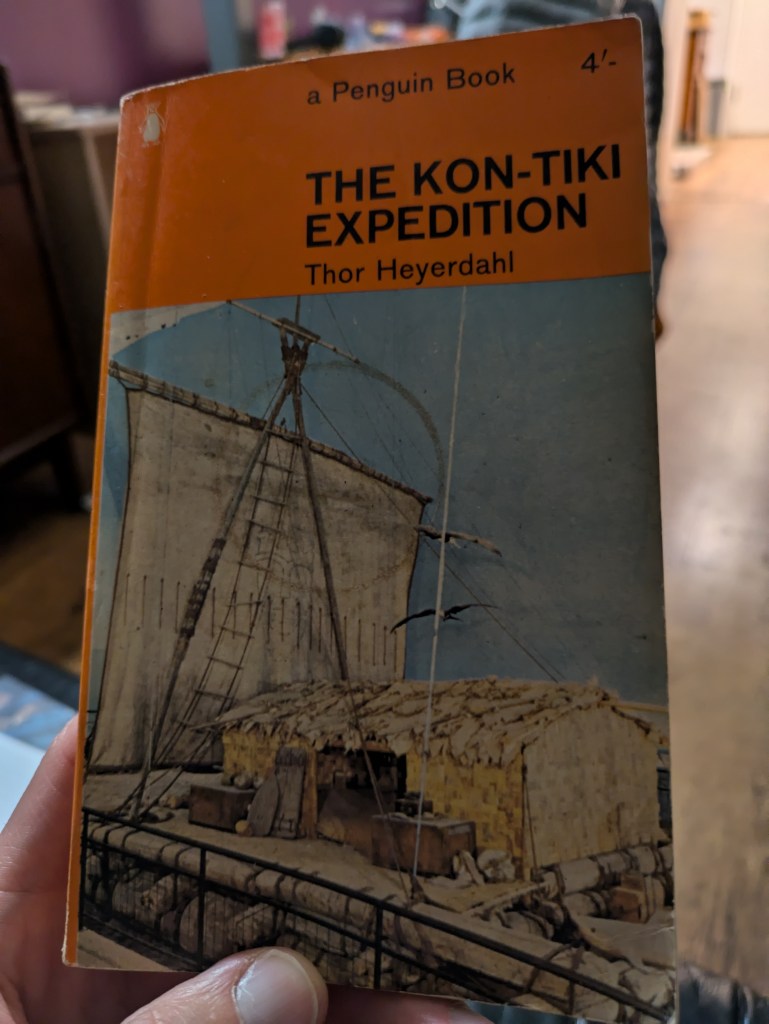
The focus for this post is ‘The Kon Tiki Expedition‘, by Thor Heyerdahl. The keyword is ‘adventure’!
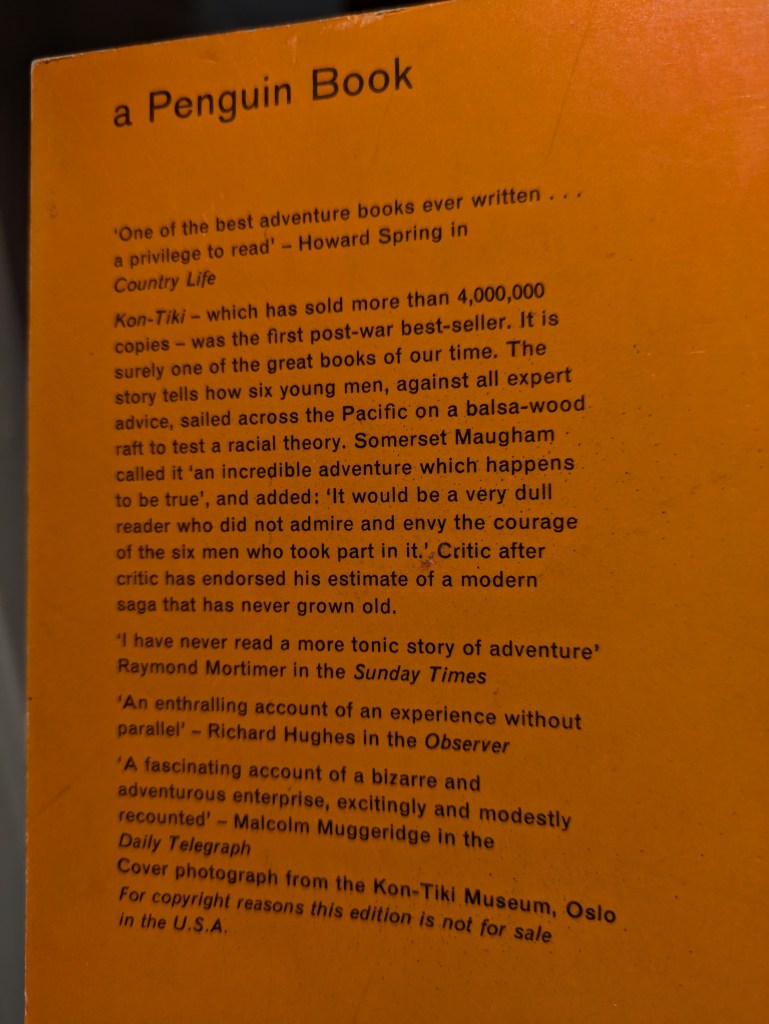
If you take a close look at the pictures above you will see one contains the description of what the expedition is all about, with lots of positive reviews from other authors commenting on the adventurous nature of the journey.
Pretty early on, you come across this hilarious exchange between Thor and his professor, arguing about two different approaches to the same subject. Thor has just finished his PhD thesis proposing the idea that ancient people used rafts to cross the Pacific Ocean. His professor is not convinced at all:
Professor: ”One thing for certain we know – that none of the peoples of South America got over to the islands in the Pacific. Do you know why? Because they had no boats!”
Thor: ”They had rafts”
Professor: ”Well you try a trip from Peru across the Pacific on a balsa raft then!”
Talk about taking it all a bit literally, no prizes for guessing what Thor went and did next. Recruited six other people, built a balsa raft according to the ancient designs (nearly wrote ‘packet instructions’ as I’m thinking about pasta as well as the raft) found in old manuscripts, and then set off across the Pacific. Just to prove his PhD thesis. As you do.
Interestingly, some of his companions on the raft make Thor Heyerdahl seem distinctly average and normal. Two of them in particular had fought alongside Special Forces in WW2 and were part of the Norwegian allied force that stopped the Nazi attempt to develop an atomic bomb. If you want to know more you can read a book called ‘The Heroes of Telemark’. So they had just settled back home when they received a telegram from Thor inviting them to build a balsa raft and sail it across the largest ocean in the world. Naturally they replied quickly and positively, ‘simply as something to do’ according to one of them.
On their journey, they experienced loads of problems and setbacks including getting stuck on a reef near an island which nearly wrecked their raft completely. They found exotic sea life previously unknown to science and discovered ancient techniques of sailing small craft that had been forgotten or not recorded properly.
The keyword for this one is ‘adventure’, a perfect word to kick us off with the series. Here’s the definition:
Adventure: ‘An unusual, exciting and daring experience.’
Thor had an idea, and figured the only way of knowing for sure was to actually build and sail a raft across the Ocean. There’s goal-setting, and setting out on your goal, and both are very different actions to take. Goal setting is where you dream up all kinds of stuff, some of it you’ll never get round to doing. Setting out is where you take adventurous action. For goals that properly stretch you (as all good goals should), the action will be daring by default because the outcome will be uncertain.
An adventure is to dare to take on the biggest enemies we have in our minds head on – doubt, anxiety, and fear – with no certain outcome of success or even survival. You will almost certainly lack some of the things you need to complete the journey, and of those things you do have, you will almost certainly have to ‘dare’ to sacrifice something you value highly in order to complete the task at hand.
The next case study is an absolute masterpiece of writing from a chap called Heinrich Harrer. It’s called ‘The White Spider‘, and is an account of the first ascent of the North Face of the Eiger. The keyword will be ‘belay‘, and I’ll explain why next week…


 leadforaliving.co.uk
Leave a comment