
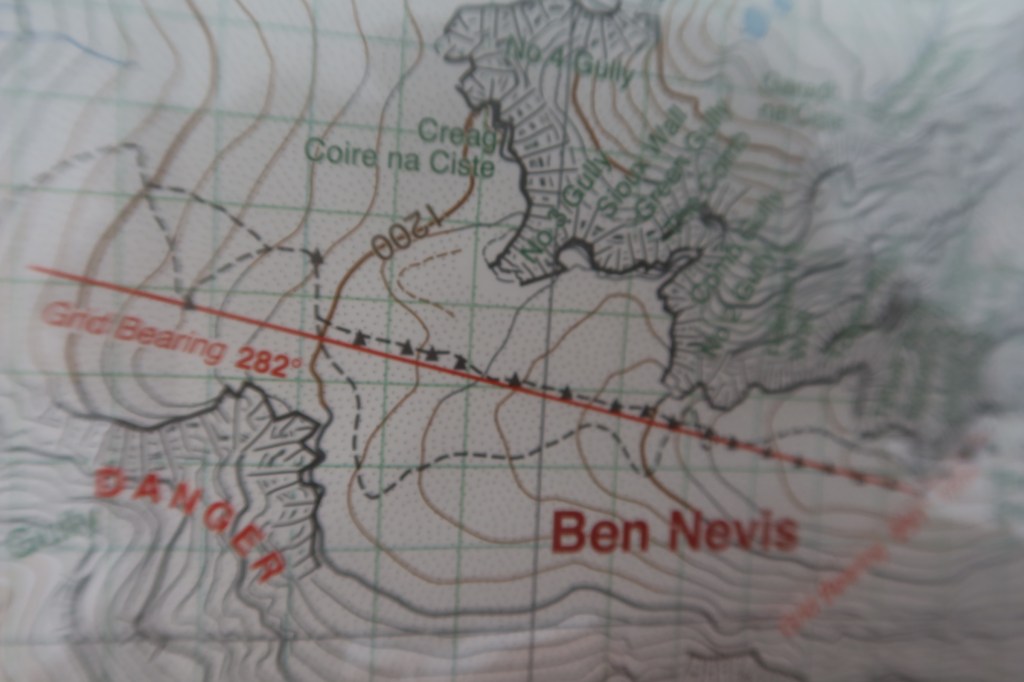
What happens when we see danger ahead on the path towards our goal?
Generally, we don’t like to feel like we have failed. Or perhaps worse still, feel like others see us as a failure. Goal setting is often used as a way of making us feel we are becoming better, more improved in some way. It is a big trend on New Year’s Day to start working towards a resolution, towards a better version of ourselves.
So what happens when the ‘cracks’ begin to appear? When we see danger ahead? When the end point seems drastically over ambitious, or when we stumble across a problem which will mean a shift towards something else is more sensible? What can we do about that?
My goal with this blog post series (52 weeks of blogging) was to convey to you a year in the life of a mountain leader, and how you can balance progress in your logbook and professional life alongside a regular 9-5 job and not burn out. I had, wrongly, assumed a healthy body for the entire year. I had also, wrongly, assumed that hiking for me was a very healthy activity and that I could continue as I have been doing without much thought. Realising that the second statement is incorrect (a GP told me this over the phone) opens up huge cracks in my progress, inviting in the idea of failure.
So does that mean abandoning it all together? No. A firm no.
One key factor here is that achieving any form of goal is a form of self-growth. That is a very difficult task regardless of what you do. So challenging, in fact, that there’s an entire library of books published each year under the ‘self help’ section.
The main issue with all goals is that we cannot see the end destination in much detail. You can try and imagine it as much as you can but the reality will likely be very different if you get there. This is especially the case if we are new to goal-setting. It is the same as looking at a map of an area you have never been to before and trying to accurately imagine the terrain before you arrive.
And then there’s the issue of all the bits in between. If you have started a New Years goal and you want to complete it by the end of the year, you might have maybe one hour per day to work towards it. You reckon you can do it in 365 sessions? And that’s not to count for things like illness and days with low motivation. A goal will force you to face a whole number of issues which you might not have otherwise encountered. There is an entire literature of ‘self help’ books which outline ways to overcome common pitfalls in goal-setting but you might not have read any of these before starting out. So what do you do? Admit defeat?
When you are facing massive challenges that force you in new directions, the starting point should be to discuss these with someone. This will directly help with any feelings of personal ‘failure’ in your goals, and also help others close to you understand why you are maybe feeling a bit down.
Being over-ambitious with a goal is, I would guess, pretty normal. I would say that a goal has to stretch you and its completion should be uncertain at the outset. There are likely a great many people out there who are impatient to improve. So apart from talking to someone, is there anything else we can focus on to help us get moving in the right direction?
One thing that has worked for me in recent weeks and days is this: start small and build up sustainably. But in addition, look out for the times when you don’t manage to complete your to-do list for the day. When you reflect at the end of the day, ask yourself why the tasks weren’t done – what needs to change to make sure they are completed next time? These answers, and the actions you take with them in mind, help you almost imperceptibly to develop. Without proactive reflection these changes can only happen either by accident or if someone else notices them for you.
My goal this year is to complete just three more days in my lowland logbook. I have other goals but they don’t involve walking.
You might feel that this is, for me, ridiculously easy. But if I were to tell you that today I have gone out twice, with each walk taking 15 minutes and at a distance of just three hundred meters you begin to see how difficult it is to do three walks of around 6 hours each. So how might I get there?
One promising tactic is to gradually normalise my body to increased amounts of activity. At present, it is 20 minutes rest, then 6 minutes of standing activity (walking, stretching, static exercise etc). Yesterday it was 20 minutes and 5 minutes. The pain level is the same as my body is getting used to it. Could I do ten minutes of walking? Probably not. Tomorrow it will be 20 minutes rest and 7 minutes activity plus two 15 minute walks. I am hoping my strides will gradually become more comfortable. (Since writing this a couple of days ago, my walking duration has increased to 25 minutes, which is amazing!)
An article by Liverpool University found that two weeks of inactivity by previously active people resulted in muscle loss, cardiovascular difficulties and movement problems. Just two weeks! I have been housebound for two weeks until heading outside just two days ago. That would explain why my right leg threatened to cramp constantly and why I found it very hard to make any form of progress. I will therefore need to do at least two weeks of gradually more intensive activity before going for a ‘normal’ walk for the first time. Learning to walk properly again is my short term goal and every meter of extra distance is hard earned.
But those steps don’t lead towards a life as a professional hiking leader full time. They lead instead to hours of outdoor reflection and refocusing as I consider how I bring my book ideas to life. I have wanted to write something for a long time and the completion of the West Yorkshire Heritage Trail whetted my appetite for more. What I have in mind is not a walking guidebook, but another interesting project. There’s a lot of reading and research ahead. What better platform for that initially than a series of blog posts?
See you next week.
 leadforaliving.co.uk
Leave a comment