
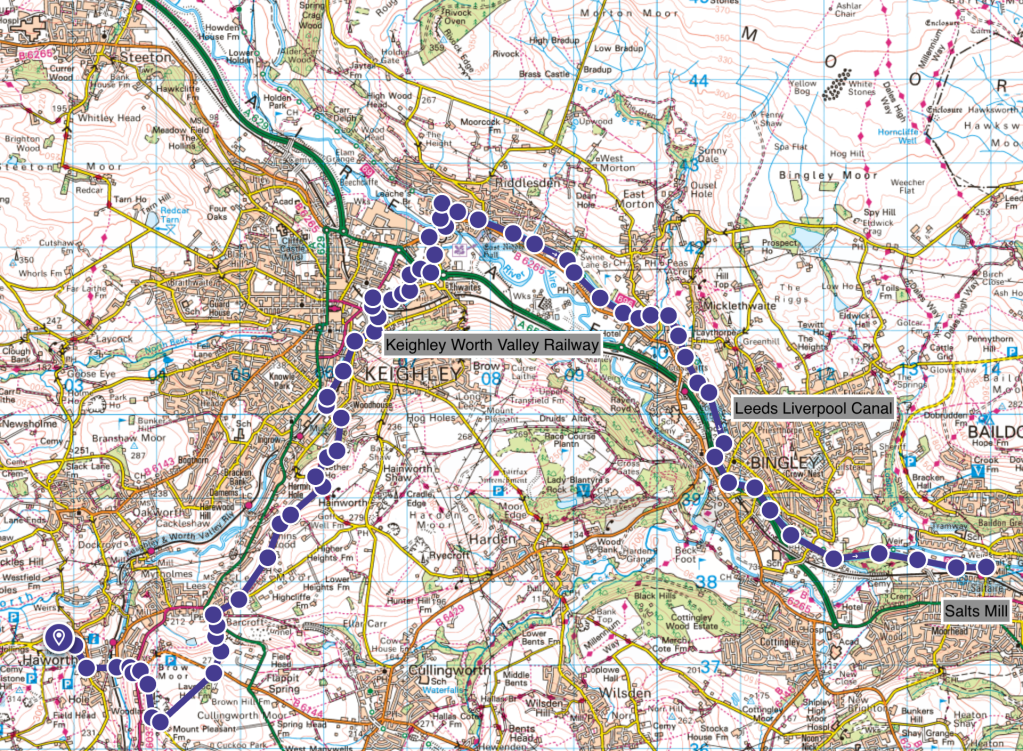
Despite its length, this section is a surprising one in terms of its variety. No matter how well you know Keighley, for example, you will be surprised by how some of the paths connect together, and how much countryside there is within a very short walk of most of the towns you will travel through. I have included a large section of canal walking to balance out the complicated navigation through urban areas in other parts.
Heritage Highlights:
1816 Leeds Liverpool Canal, 1853 Old Stocks, 1853 Salts Mill, 1867 Keighley Worth Valley Railway, 1869 Dalton Mills, 1923 War Memorial
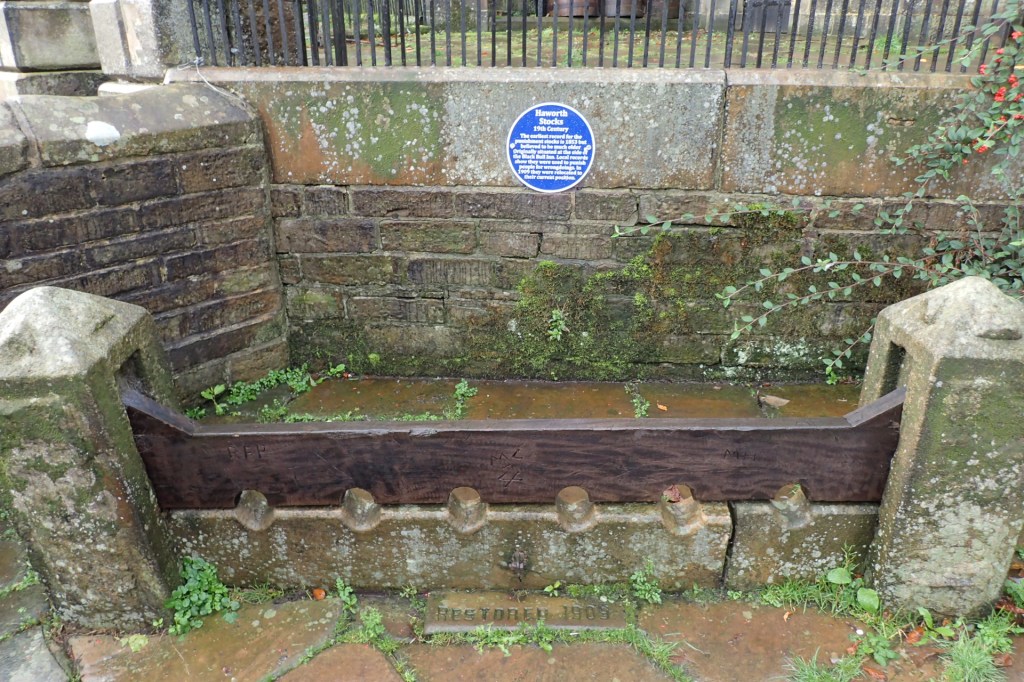
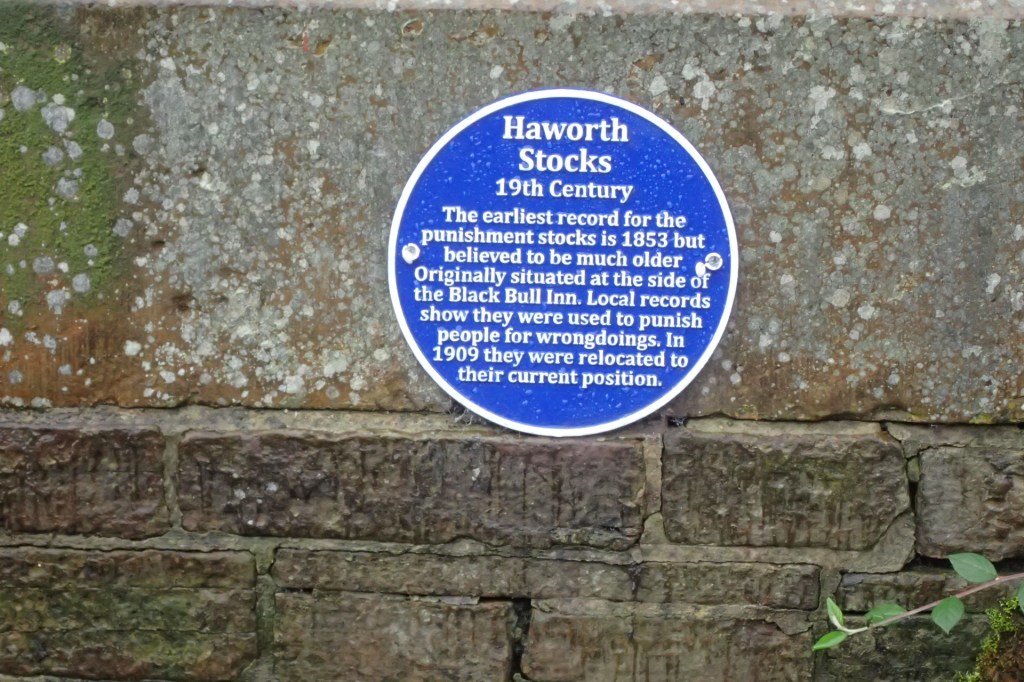
This section starts in Haworth, at the top of Main Street. From here, go past the Old Stocks on your right and down the cobbles. This is a steep road, leading down to a bend in the main road at the bottom.

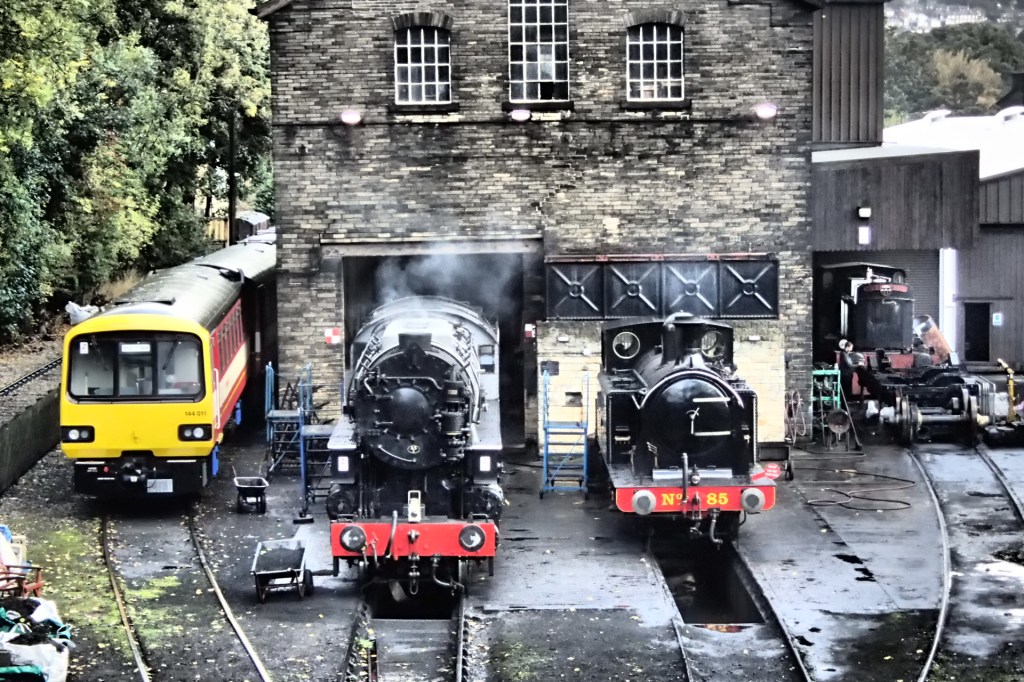
Then, follow the road down steeply to a bridge over the Keighley Worth Valley Railway line. There’s an engine shed on your left, and a war memorial on your right. Go to the right, past the old doctors surgery, and steeply up hill.
The KWVR was opened in 1867 and enjoyed prosperity until the coming of the roads which forced closure in 1962. Luckily it was saved and in many ways it is thanks only to the public value of heritage that it remains open to this day. Having taken a couple of journeys on this line I can recommend it as a great day out.
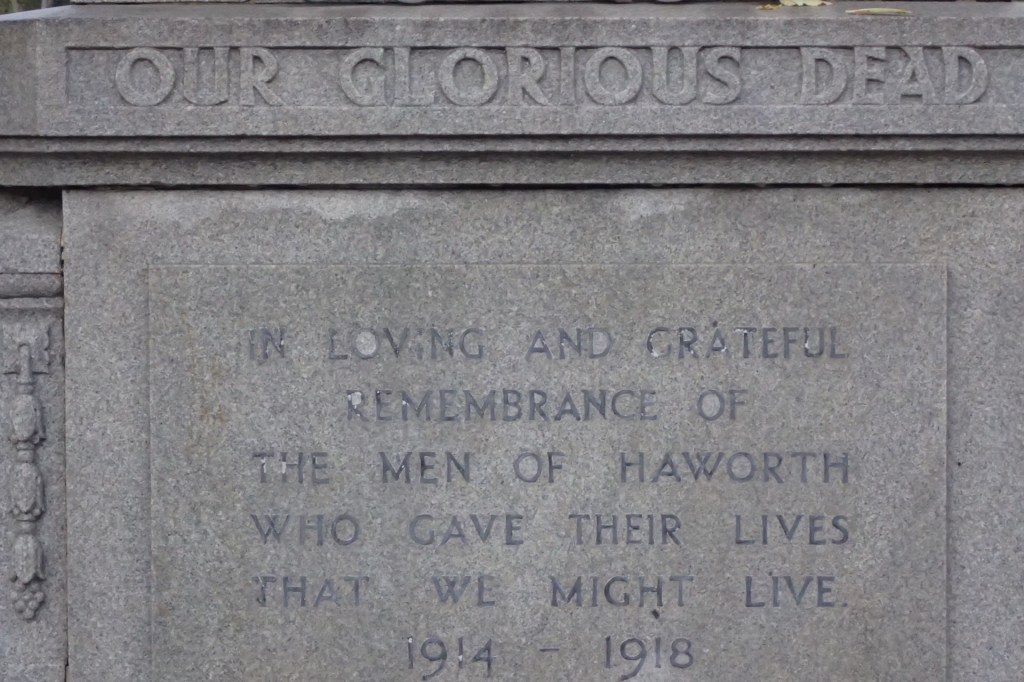
The War Memorial was built in 1923 during a time of national commemorations generally for those who lost their lives in the Great War (1914 – 1918). Handmade by a company based in Pontefract, the process to fund the creation of these monuments to fallen soldiers usually came from a community effort rather than one or two wealthy patrons. Over 100 lives are recorded on this memorial, which is particularly striking considering how small Haworth would have been a century ago.
At the top, head right and then at the crossroads, head immediately straight over to a road curving away to the left. Soon, on your right, you’ll see a sign for Black Moor Road. Take this and follow it as it winds past a wind turbine until you see a signpost on your left for Worth Way and Senior’s Way. This is the start of some access land and increasingly good views of Keighley.
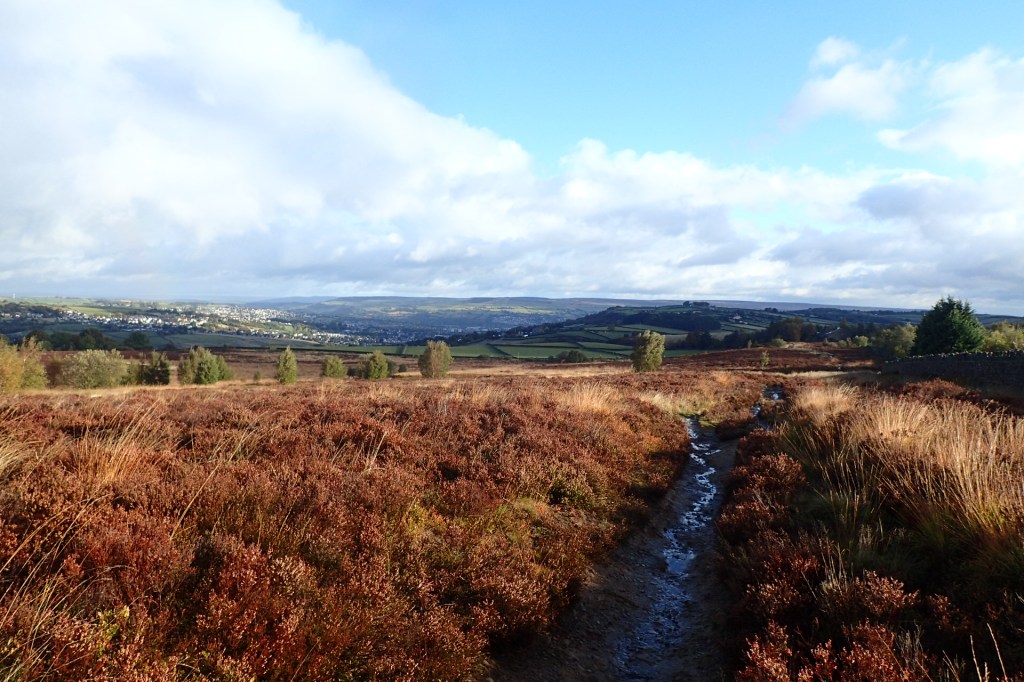
Follow this path over the moor top and down to Brow Top Road, and carry straight on to Hardgate Lane. This leads to a small cottage on your right and a lovely stonewalled path down eventually to the A629. It can be a bit busy here so take care. Straight over the road, on the right, is Bingley Road, heading steeply uphill and curving to the right. Take this, being careful to stay on Bingley Road and not head down the cut-de-sac of Barcroft. Around 50 meters later you will see a dirt track branching off the main road to your left. This is Moor Bottom Lane with a sign for the Worth Way. Follow this to Hainworth.

Hainworth is a lovely small hamlet, just a few houses really. There’s a junction at the end of the path, take the left road (Hainworth Lane) and follow this as it curves and descends to Hainworth Wood Road on a cobbled lane.
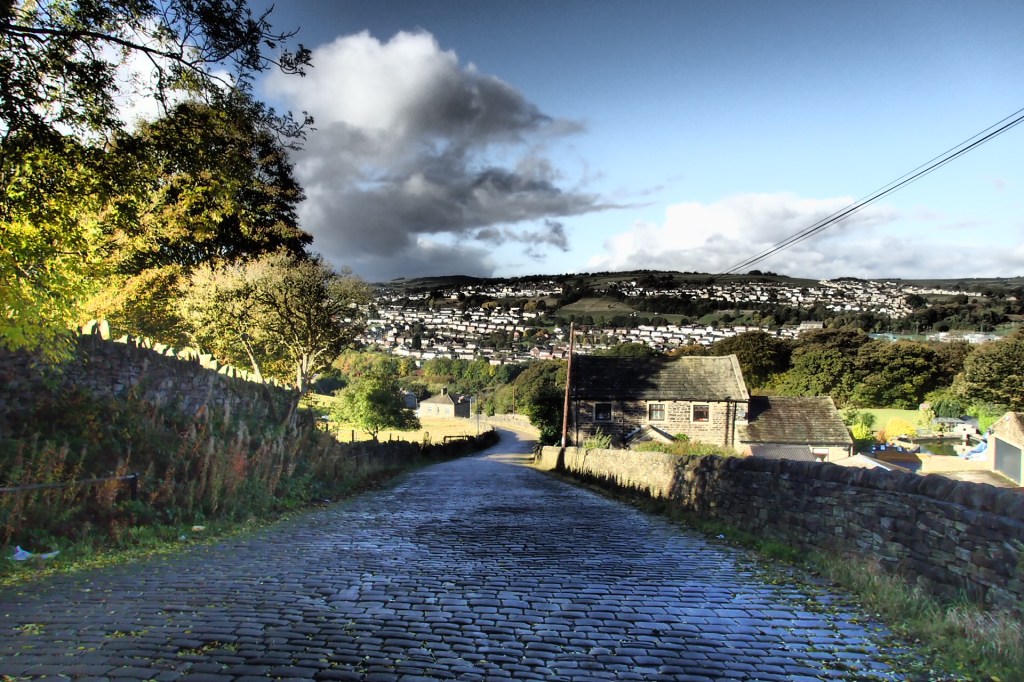
Follow Hainworth Wood Road until a junction with the Community Centre on your right. Turn left, down Woodhouse Road, over the railway line and almost up to the row of terraced houses ahead. Just before, turn right onto the Worth Way.
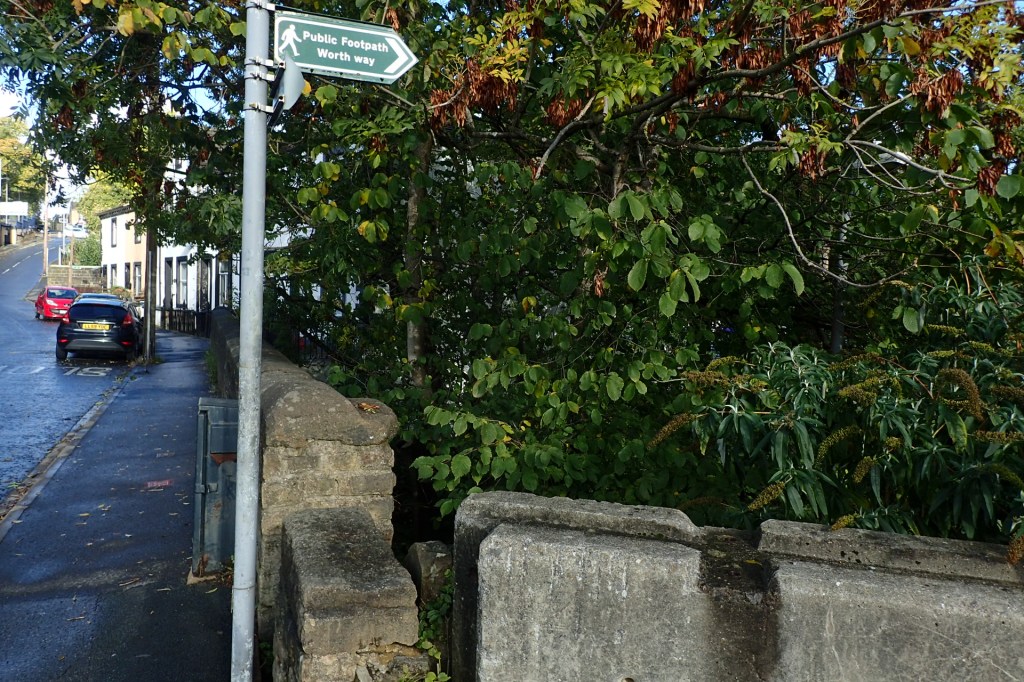
Keep on following this and you will eventually emerge onto one of the busiest road sections of the entire route, just next to The Globe Inn. You’ll see a railway bridge immediately next to you, and on the other side of the road, a small archway. Cross and go through it and then immediately left, following the railway wall. This then emerges on Low Mill Lane – head left and follow this until you reach Bradford Road with Keighley Railway Station on your right.
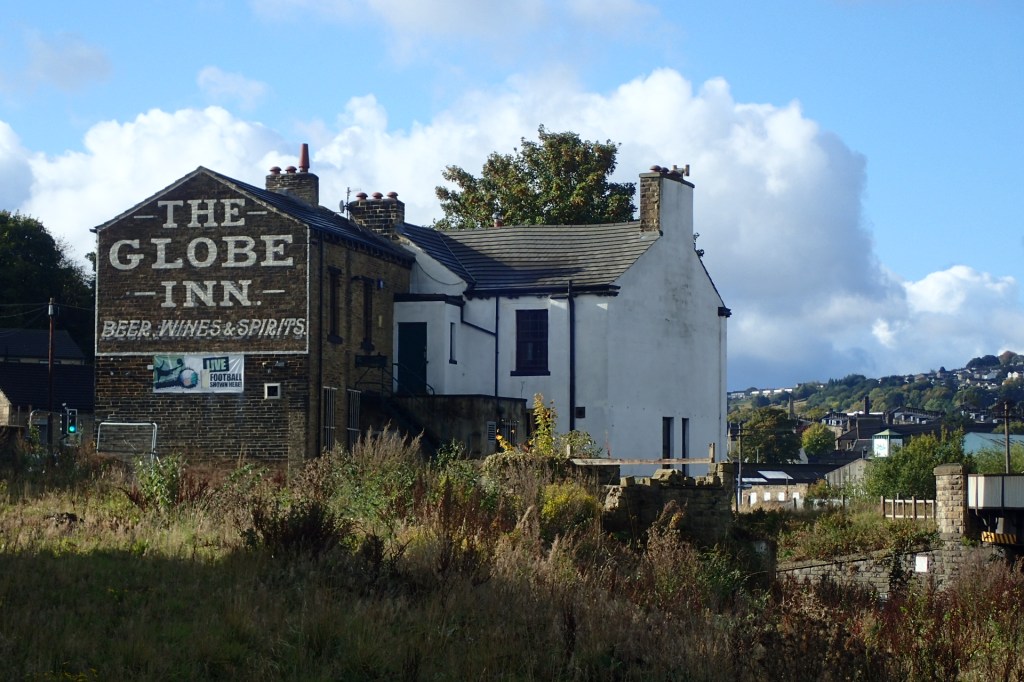
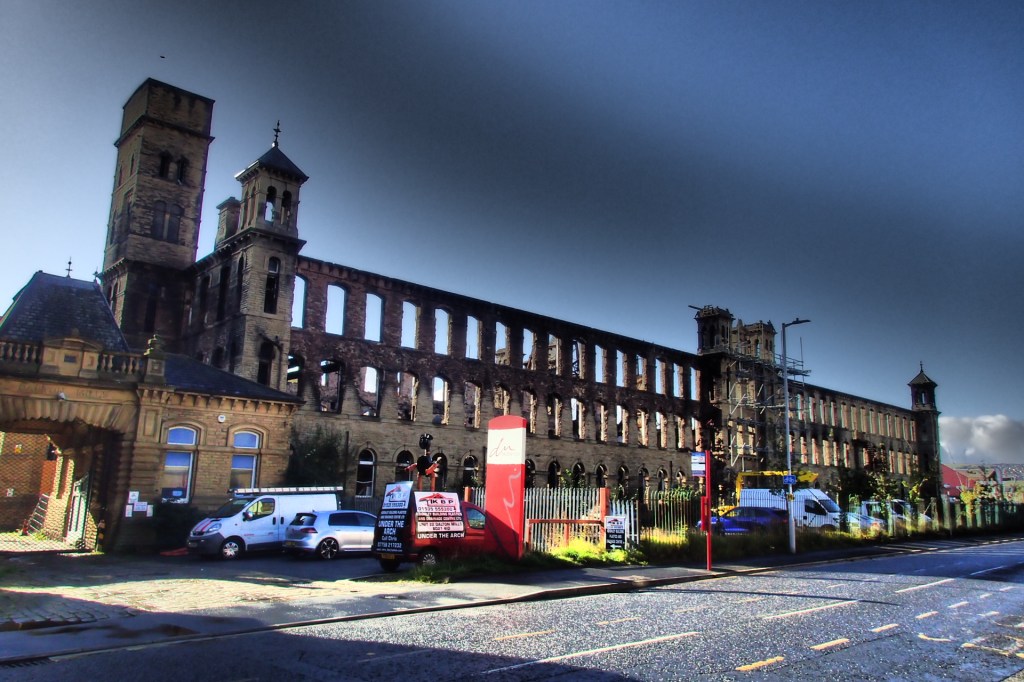
Opposite, there’s a large ASDA supermarket and ahead on the right, a huge college building. Keep the college building on your right, and head down Dalton Lane. A little way down this road, also on your right, you will see the large ruin of Dalton Mills. Just after this, on your left, take Worth Bridge Road to the start of the Airedale Greenway.
Dalton Mills, constructed in 1869, stand on the site of an even earlier mill building complex called Strong Close Mill. Owned by the Craven family, it was the biggest textile processing mill in Yorkshire. Despite declining trade, the mill struggled on until it closed in 2004. In recent years, a series of large fires have caused serious damage to the building, with at least one of the incidents treated as suspected arson by copper thieves. It has been used as a TV set for Peaky Blinders before the last fire in 2022.
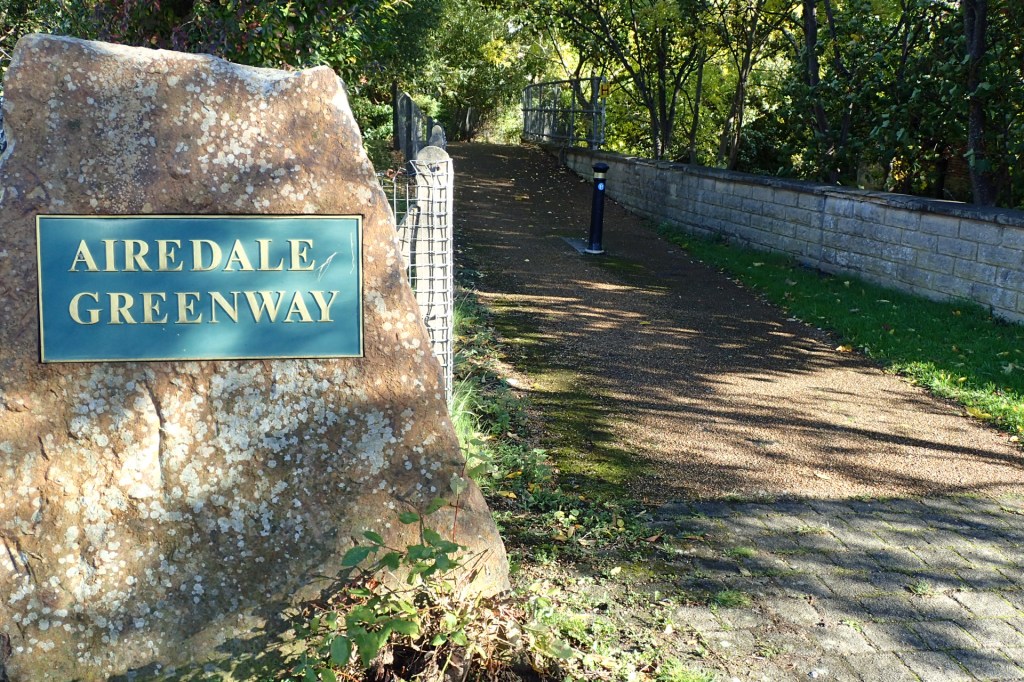
Follow this marked cycle route (the blue signs) until you reach the canal. The route will head under a busy road, come to a T-Junction at which you turn left near a forge and workshop, and then you will be on the main road heading in to Keighley. Use the nearby crossing on your right, pass a fish and chip restaurant on your left and head over the river bridge, following the road around to the right until your see Bar Lane. Head up here and you will find a bridge over the canal. Go right on the Leeds Liverpool Canal, heading towards Crossflatts, Bingley and Saltaire.
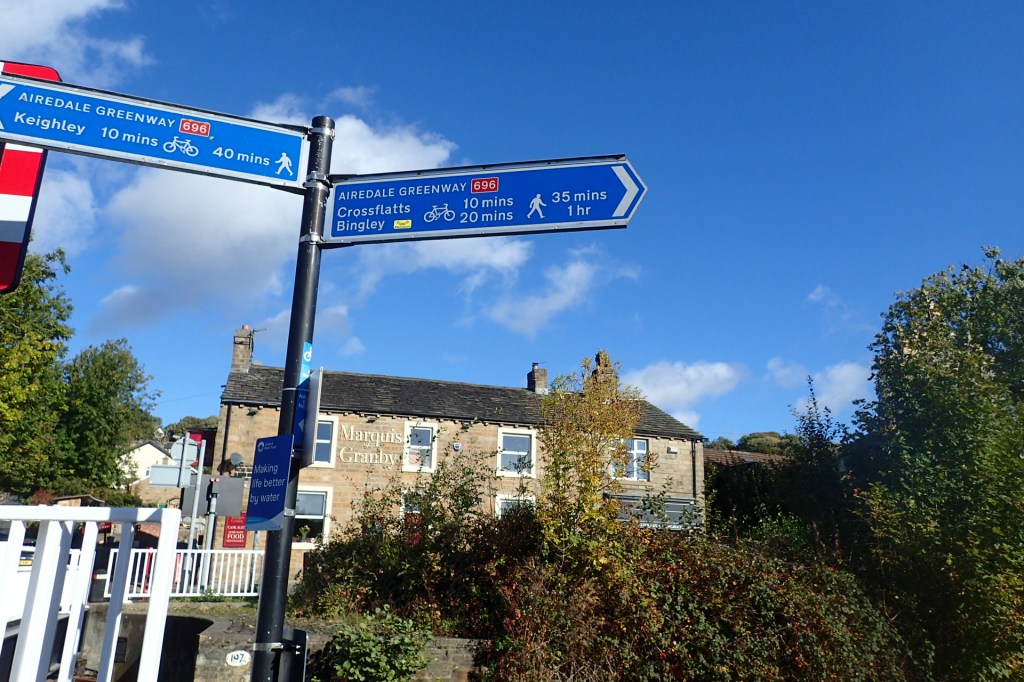
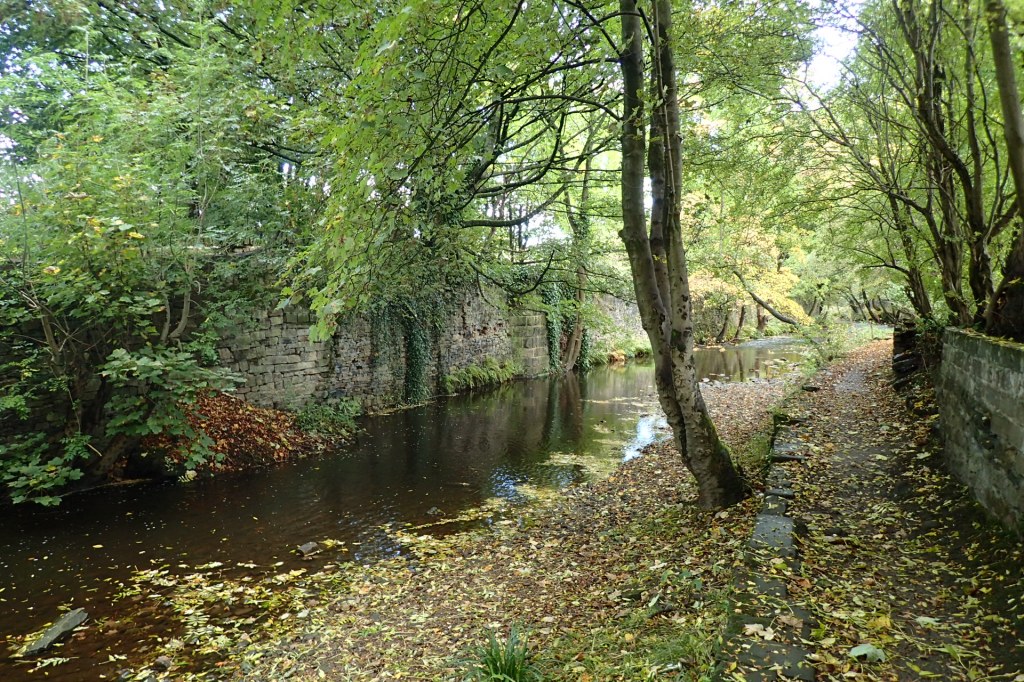
The Leeds Liverpool Canal was at the forefront of engineering in its heyday with boat traffic finally making the full journey of 127 miles in 1816. Canals were critical for the flourishing of the industrial revolution and the wool trade of West Yorkshire. The workers may not have seen it that way though – the toil and hardship to manually dig millions of tons of earth for this to be built would have led to many injuries, deaths, exhaustion and in some case sudden unemployment when companies went bankrupt or costs spiralled out of control. Canal building was not a stable trade, particularly as it was quickly superseded by the coming of the railway age.
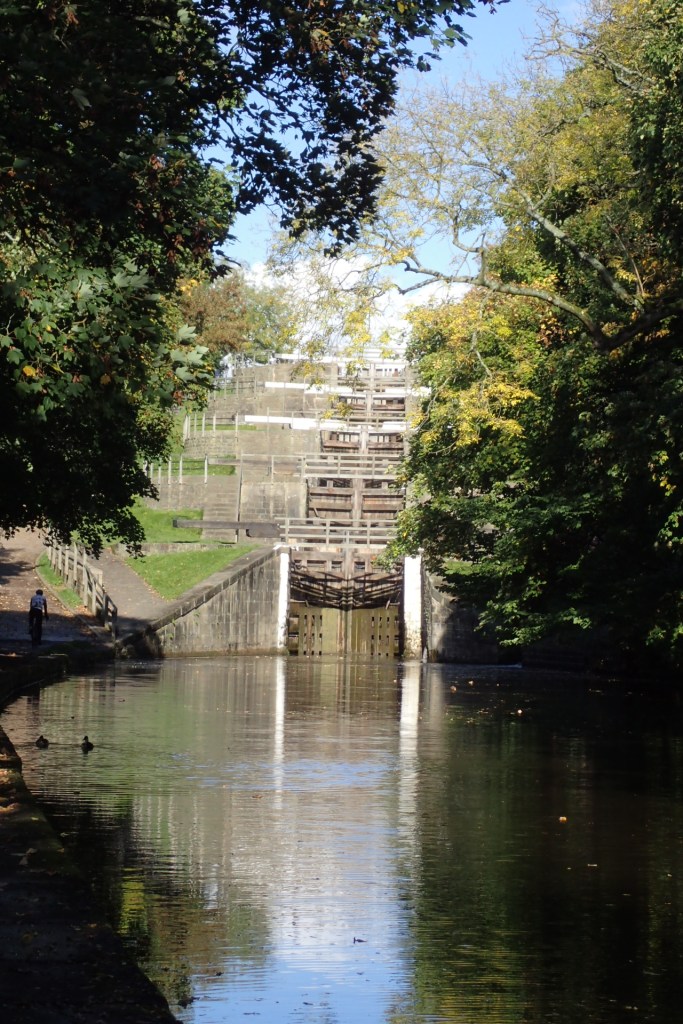
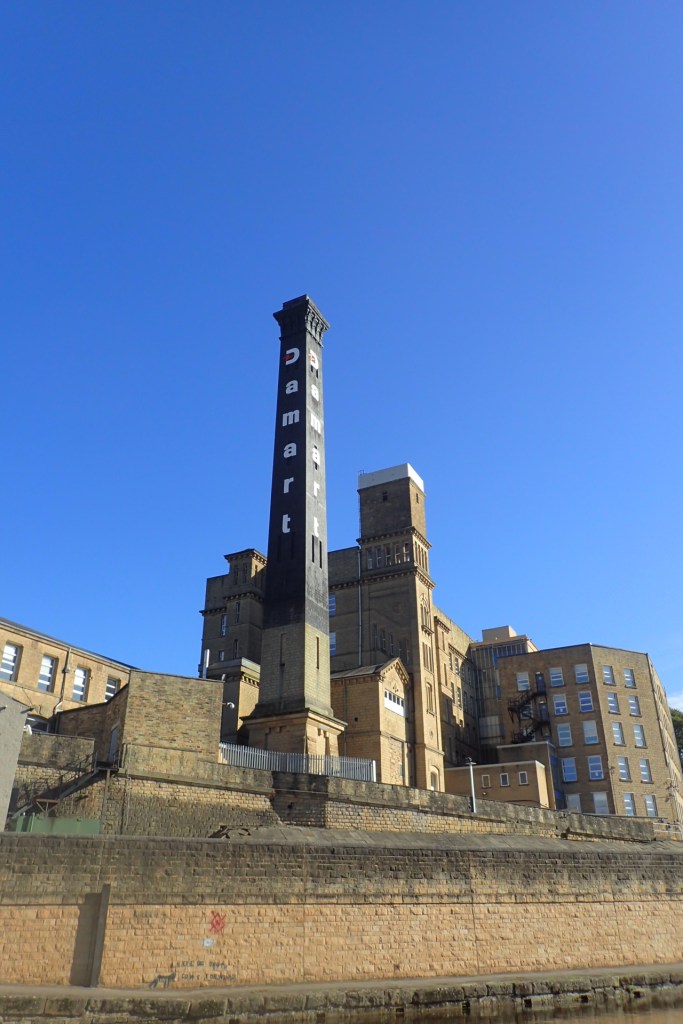
Follow the canal towpath now all the way to Saltaire. You will pass by some distinctive features on the way. These include the Five Rise Locks and Damart Chimney, both very close to Bingley. Eventually you will arrive in Saltaire, where you can exit the towpath and head over the bridge across the canal, not the river, and then find the entrance to the incredible Salts Mill.
You have now finished all of the West Yorkshire Heritage Trail! Congratulations if you made it all the way round – feel free to let me know what you think of it by sending me an email: info@leadforaliving.co.uk
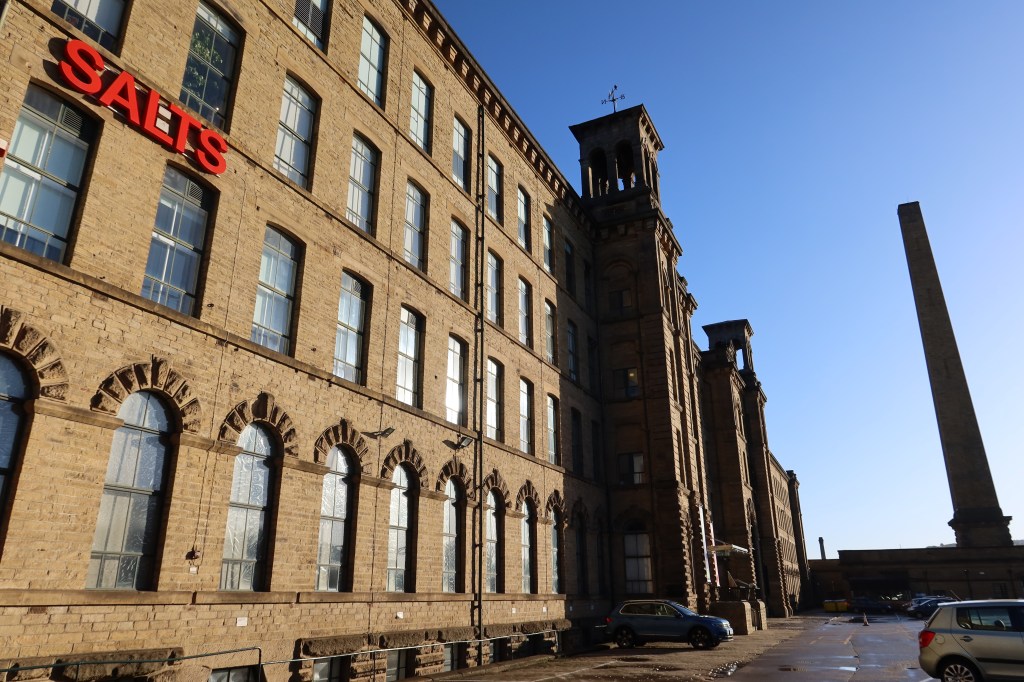
Building work began on Salts Mill in 1851 and took only two years to be completed in 1853. It was the first site to be finished, before work focused more intensively on the remaining streets and workers residences. Funded entirely by Sir Titus Salt, it is the best surviving example of a rare philanthropic vision to provide a high quality of life and stable employment for an entire community. Today, the town is well-maintained and the mill itself is a must-see, both inside and out.
 leadforaliving.co.uk