
Before I begin, a bit of a newsflash for you all: I’ve actually gone and booked onto a Lowland Leader training course! And I also just realised that this is my 100th blog! Should I mark the occasion in some way?
If you are reading this, can I just say a massive and heartfelt ‘thank you‘ – it takes a long time to research and write the posts for the quality days, never mind route planning, hiking and filming. An especially big thank you to my subscribers, both on here and on YouTube. For newcomers to my blog, a warm welcome. I hope my adventures help shape your career path in some way. I’m very pleased to have made it so far. That’s 100 attempts to focus on progress, log valuable time outside, share insights with others and try to squeeze in my Mountain Training journey alongside a regular working life. No idea how well I have succeeded so far but here’s to the next 100. There are many more miles still to go.
I’m very excited to prepare for the Lowland Leader training course, and it definitely makes everything feel a bit more real. I know my logbook will be scrutinised by an experienced trainer and assessor so I’m mindful to add high quality days to it. Such as the one below. Video at the bottom if you prefer to watch it.
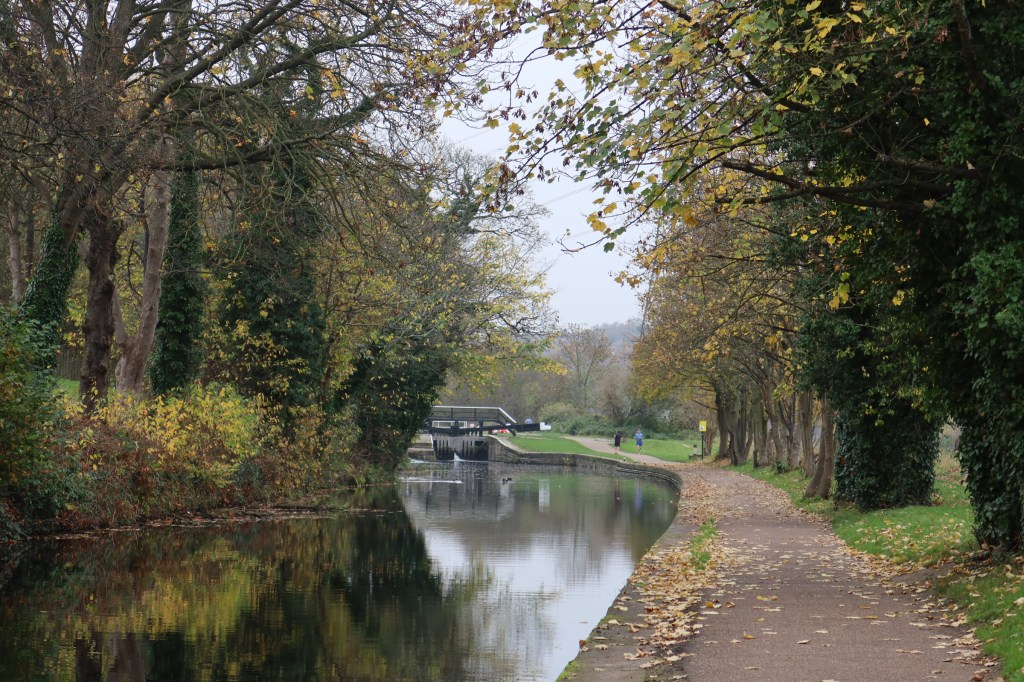
Continuing on with my progress on the Leeds Liverpool Canal trail, this is the second circular walk which also satisfies the requirements for a Quality Lowland Day. I have outlined what these are and how my route matches them in turn below. I’ve also included a reading list.
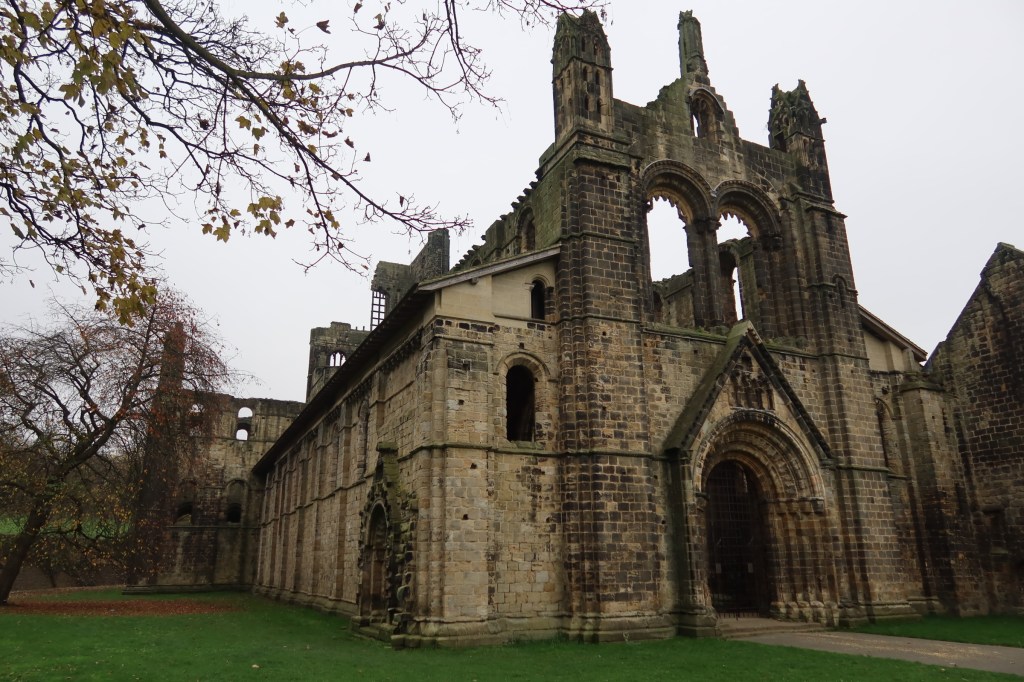
The first part of the route ended at Kirkstall Abbey, which is now in ruins on the outskirts of Leeds. Founded and built in 1152 by Cistercian monks, it was laid to waste by Henry VIII during the Dissolution. Particularly haunting aspects of it include the gaping hole in the eastern transept where the stained glass windows would have been.
Hunting down the quarries where the building stone came from for the abbey was quite a challenging task. I had imagined an actual quarry face but it has been disused for nearly two hundred years and is grown over. I did find blocks of stone lying around which had obviously been ‘worked’. See the video for more details.
Moving along towards Rodley Nature Reserve, I was very pleased to discover a quiet and well organised series of hides to spend time watching wildlife. My knowledge of birds, animals and nature generally is very limited so this was definitely an excellent chance to get out the RSPB guidebook and try to identify something. Worth investing in some small binoculars next time though. I think I spotted some gulls but I can’t be sure.
I always try to walk an ‘escape route’ during my quality days. This is because if I ever decide to come back with a group I will know of options to shorten the walk and I can also keep up to best practice with regards to route planning. My chosen route, the packhorse bridge to Horsforth via Bar Lane, was really good.
Initially I had planned to scout out some geological formations at Apperley Bridge, mentioned in the British Regional Geology guide I bought. However the book has proved to be way too technical in its terminology, and is likely written for specialist geologists out in the field doing surveys. So I have decided from now on to link the geological aspects of learning about the outdoors on these days to discovering local rock climbing crags. This is because anyone going through the hiking schemes might well be interested in the outdoor climbing awards too. In rock climbing books there is often a basic bit of info about local geology so I figured it would make a more interesting and beneficial perspective rather than some complex terminology out of a university standard field guide! Lesson learned.
I took the Leeds Country Way back to Horsforth, which I show clips of at the end of the video. It is a lovely, varied and adventurous route, weaving between areas of housing and local streams. The view from the highest point of the walk, seen in the final clip of the video, is the local church and a large sycamore tree. This makes for a suitably dramatic finish to a really good route.
Quality Lowland Day requirements, as set out by Mountain Training.
All the following criteria should be fulfilled:
- ”The individual takes part in the planning and leadership” – Although the Leeds Liverpool Canal is extremely well documented in various guidebooks, and covered in Mary Welsh’s LLC Circulars in good detail, I personally planned a new circular not in any of the literature and also an ‘escape’ route which I also walked in both directions.
- ”An unfamiliar locality is explored” – The northern section of the trail was brand new to me, from Horsforth to Kirkstall Abbey. Bramley Fall Woods and Rodley Nature Reserve were also new locations.
- ”Navigation skills are required” – You will see me using basic navigation skills in the woods at Bramley. In my opinion, a woodland environment is similar to one with limited visibility and I think that using a compass can be really useful to figure out which of the many tracks are best suited to your overall destination. It is so easy to get completely disorientated in a wood, even though they are usually close to roads, signs and well made tracks.
- ”Knowledge is increased and relevant skills practised” – I increased my local knowledge of where the stone was sourced to build Kirkstall Abbey, and also what sort of birds can be found in marshlands at this time of year. Identification of wildlife is a very complex skill requiring loads of specialised knowledge and it is this which I am focused on gaining a lot more of before I go to assessment.
- ”Judgement and decision making is required’‘ – A judgement was made at the packhorse bridge near Rodley Nature Reserve regarding whether to push on to Apperley Bridge or not.
- ”Four hours or more journey time” – The walking time was 7 and a half hours.
Reading List:
British Geological Society: ‘The Pennines and adjacent areas’ (2002) Hawthornes Publications
Goddard, Christopher: ‘The West Yorkshire Woods Part II – The Aire Valley’ (2021) Gritstone Publishing Co-operative
Pevsner, Nikolaus: ‘The Buildings of England – Yorkshire West Riding’ (2014) Yale University Press
Taylor, Marianne: ‘RSPB Pocket Guide to British Birds’ (2022) Bloomsbury Publishing
Welsh, Mary: ‘Walks from the Leeds Liverpool Canal’ (1996) Cicerone Press
 leadforaliving.co.uk
Leave a comment