Estimated reading time: 10 minutes.
As promised in a previous blog about doing a year of career development, here is the first instalment.
I have been a Careers Adviser for ten years. For the same amount of time, I have also been a Mountain Leader. The question I am focusing on is: how can you use career advice to help develop a career as a Mountain Leader? It is a really good example to pick on as there are very few job postings for this role, and most individuals create their own career path. Hardly any companies hire these professionals full time, year round. It might be that you are also thinking of being creative with your career decision making, but you’re not sure about how to proceed. Proactively following through with basic career advice can be a productive way forward. I will show you how.

I’d like to start with a look at ‘research’, what it means, and what it can look like in practice. The reason I’m starting with this topic is because it is all too easy to make assumptions about what a career is like (maybe influenced by TV shows, friends, news articles etc) which turn out to be not quite right when you get there. Non-outdoors folk might instantly think about Mount Everest or doing the National Three Peaks challenge. Plenty of people have asked me, when I tell them I’m a Mountain Leader, ‘so what do you do with that then?’ To many, it’s an unknown, maybe experienced briefly during whatever inevitably traumatic experience they had with the Duke of Edinburgh scheme if they went through that. The answer is that there is a lot you can do with it, from guiding charity walks to making guidebooks, from teaching navigation, to delivering ecology workshops. But getting clarity on those end points is essential because it will help you to answer the question of what to do next in your time away from your regular job.
Research is sort of like a spectrum, with one extreme being ”let’s just put a question into Google and that should be OK”, and the other being ”I just signed up for a PhD thesis to do 3 years of intensive searching”. Good careers research is somewhere in the middle.

The key is the word itself – re-search. Basically, you get a bunch of keywords (like ”leader” or ”mountain” for example) and search for them once, then twice, then three times (re-searching and re-searching) but doing so through different channels of information retrieval. One such channel is Google, though there’s also DuckDuckGo (I kid you not, check it out) and of course YouTube. I also used the Financial Times website but more that in a sec.

By doing multiple searches of the same keyword, you gain a multi-layered understanding of a word, how it is used, what people mean by it, and also, crucially, clarity on a career associated with it. You can do this for any series of keywords, however I’m using the following for my research: ‘career-development’, ‘mountain leader’, ‘personal development’, ‘leadership’, and ‘decision-making’.
A few rules here. Firstly, be open-minded. Don’t just read articles you find appealing, also read the ones you find boring. You never know when you might come across an interesting insight from someone. Good research is methodical, meticulous, detailed, fair and referenced. The end result will be a much higher awareness of your keywords than you had when you started, and likely this will lead to greater clarity about whatever career options you have chosen to research in the first place. Five keywords/phrases is enough to get started with.
So what impression of Mountain Leadership did I get from my online keyword research? I got useful quotes, key pieces of advice, insight and wisdom from around 40 different websites, individuals and articles. Companies as diverse as ‘Indeed’ and ‘Oxford University’, ‘Harvard Business Review’ and ‘Apple’ had things to say about my keywords. One thing that struck me was the amount of times the word ‘career’ was associated with ‘navigation’, and it is because of this that I am making navigation a central part of the blog series. Career as a journey? Definitely. But what makes good navigation for that journey? The answer is very complicated but it will be examined a lot as I go.
So what about the Financial Times I mentioned? Well, it struck me that a company focused entirely on finance might have a thing or two to say about career development and leadership. Luckily, they offer at the moment a trial subscription on their entire back catalogue of articles for £1 per week for four weeks. Just long enough for my research purposes and cheap enough to afford. Be warned though, if you don’t cancel then they charge you £50 per month! I made a note in my diary to cancel it before risking bankruptcy.

They had a bunch of useful articles but nothing related to the outdoors and careers. Plenty of cases where CEOs around the world had made metaphorical use of ‘mountains’ in a business sense. But nothing really that useful to help me answer questions about what it is a mountain leader actually does for 40 hours per week. What does their day job look like? How do I best prepare for it? What sort of work can they take on? How much do they earn? Etc.

Here are 5 quotes for 5 keywords:
”’Career development is…navigating a career path, making informed decisions, and developing strategies to achieve goals.”
”Personal development is…introducing small changes into your life gradually.”
”Leadership is…the ability to understand peoples’ motivations and leverage them toward a shared goal.”
”Decision making is…seeking valuable input.”
”Mountain Leadership is…training hard and fighting easy.” (!)
To summarise these findings as a small example, we can see that a career decision should be ‘informed’, the changes should be small and gradual, people centred, you should seek the value of others’ experience, and be thoroughly prepared for your work. These could apply to everything.
How did my adventures in October help to decrease the gap between me as I am now and the two outcomes I am hoping for?
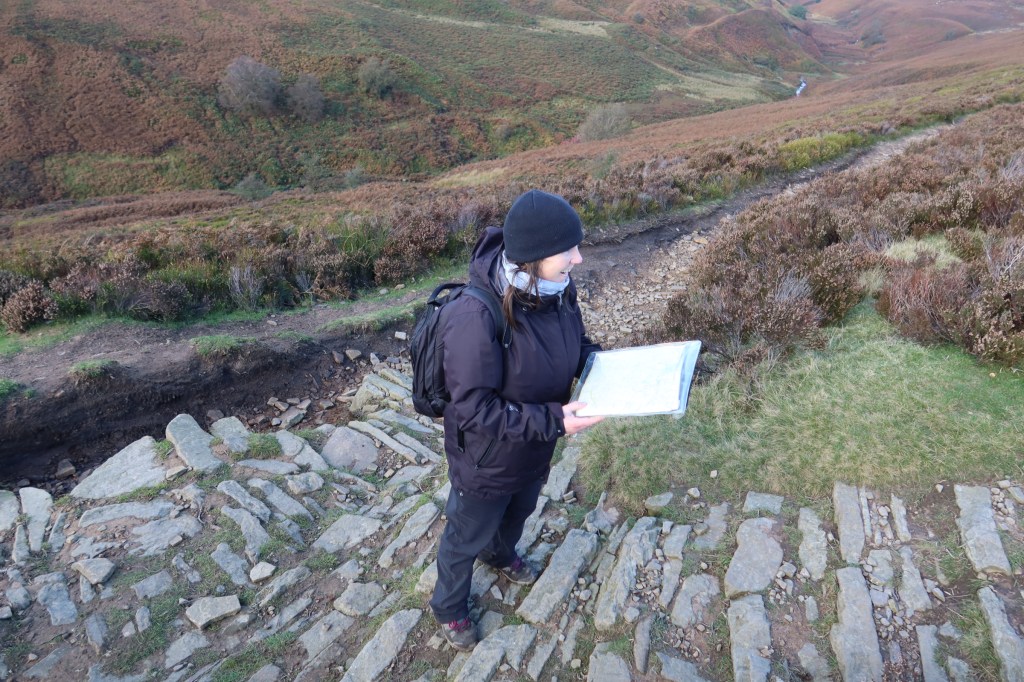
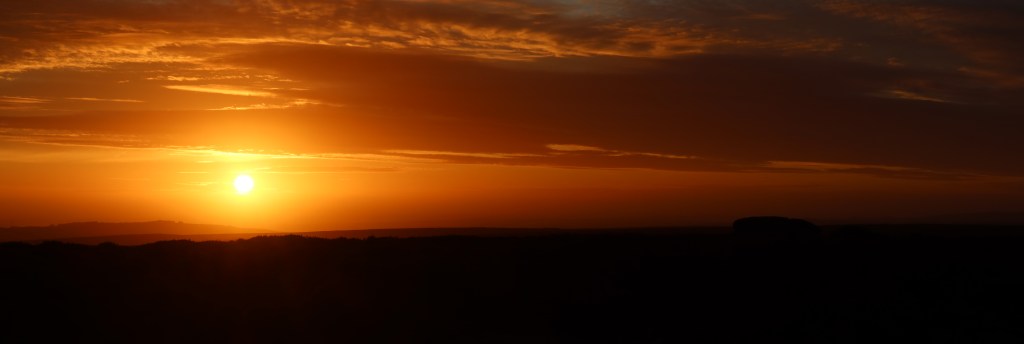
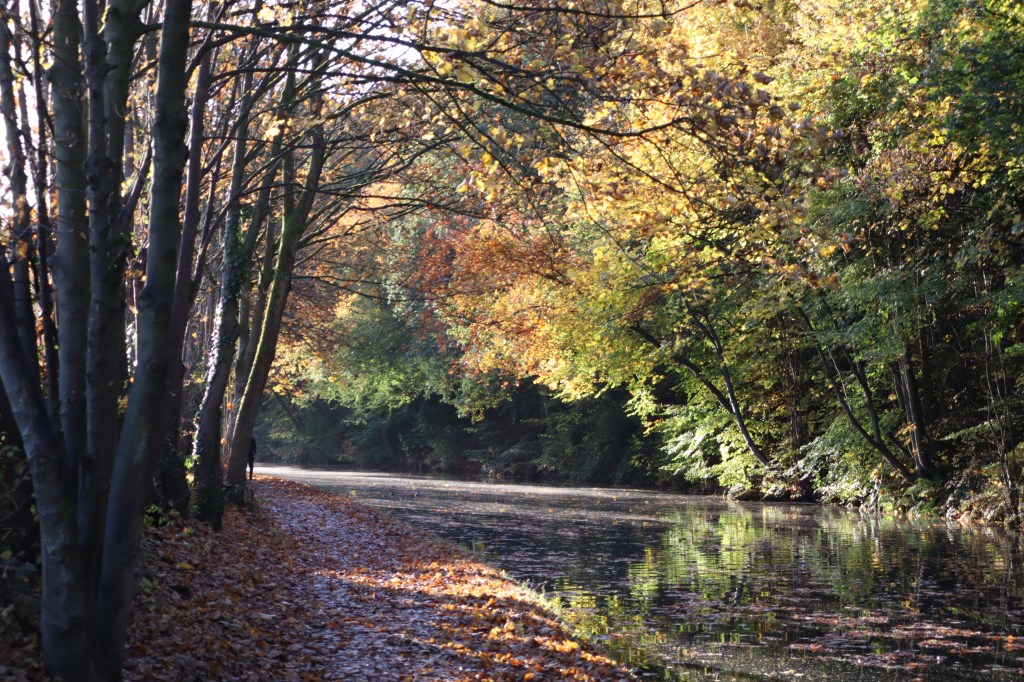
I started by doing a recce for a navigation training session I was putting on voluntarily for some colleagues at work. Then, I did a sunrise hike to pretty much the exact same place I did the training, and then prepared for a Quality Lowland Day on the Leeds Liverpool Canal. This is essential if I am to pass the Lowland Leader Award. I did another sunrise hike as I am putting together an ebook and again, need the sunrise photos for that. I actually went back to the canal again last weekend to take yet more sunrise shots. Basically, one of the end points I am aiming for is to produce a good quality guidebook as well as develop as a leader. Effectively, these are two very different careers but both based outdoors.
It is clear that a Mountain Leader does a lot of things in their working life, and their remit is wide. There are many creative opportunities and chances to help others develop, a bit like the careers sector. This is the main message from research. The next piece of advice I will focus on is one I often tell students in my appointments to consider: ”watch some YouTube videos, you might be surprised what you learn about your career interests!’. So how exactly can YouTube help me become a Lowland Leader then? Find out next time…
 leadforaliving.co.uk
Leave a comment