
Pushed for time? Check out my video at the bottom!
Reading time: 15 mins.
As I make progress through the Lowland Leader scheme, it strikes me that it makes a really good qualification to help you as a leader think carefully about the abilities of your group. Why is that?
At first, I nearly dismissed the idea of doing the award at all. I mean, why bother? I have the Mountain Leader award, surely that covers me to lead walks on canals, right? Technically yes, but practically really it doesn’t. One major reason is to do with ability. If you are asked to lead a group of people with either limited mobility, disabilities or those who are simply unfit or struggling with weight/health/diet problems, then the last place you want to take them is straight up a mountain side. Unless you’re in the military or something! Think how terrified they might feel if they were told that a ‘Mountain Leader’ was going to take them out to help them exercise. Start with thinking about the least able type of client you might have to lead – how would you adapt the route for a wheelchair? Where would you go? And I think as a leader you should be totally prepared to lead walks of all ages and abilities. This is what partly makes a good leader.

Lowland routes (below the 300 meter contour line in my opinion) are ideal as quite often they are canal side, river side, or through woodland. Of these, the canal walks are by far the most accessible. There’s a good reason they are very busy with all kinds of users and this is why.
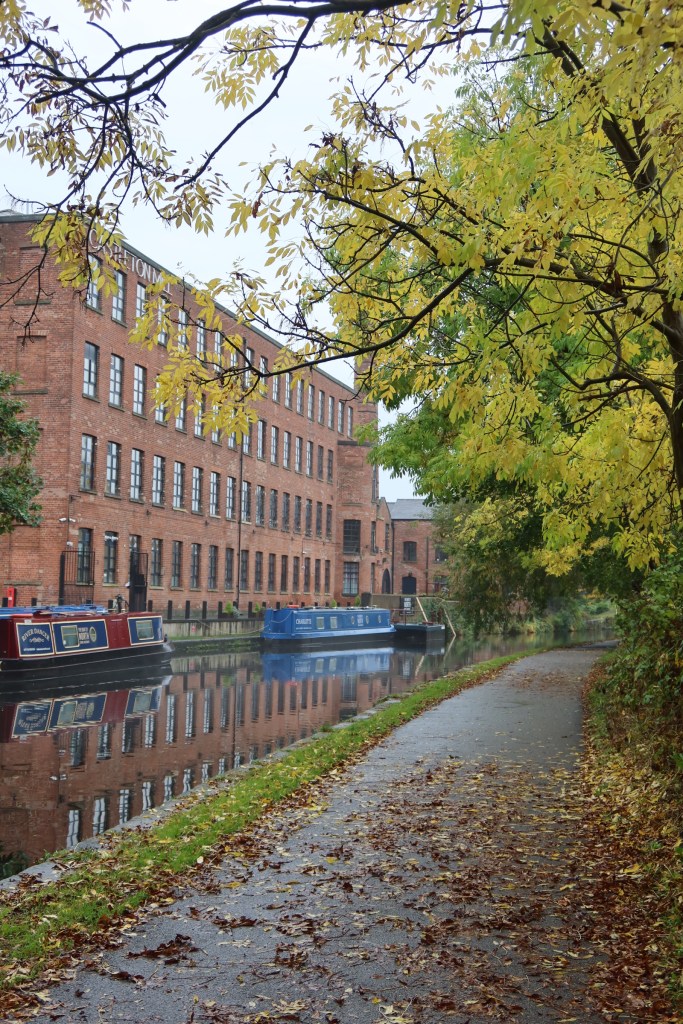
I have chosen the Leeds Liverpool Canal as my Lowland Leader project route. I plan to walk all of it before assessment, each day being a circular route that uses a different section of the towpath. Starting my journey in Leeds felt really strange as it’s unusual to begin a route for Mountain Training qualifications in the middle of a big city, but there you go. I think it actually makes for the best starting point. If you can’t get a route right in a major city, full of signposts and well made walkways, you can hardly be trusted to plot and follow a route in the night on a mountain in bad weather. Learn to crawl before you can run!
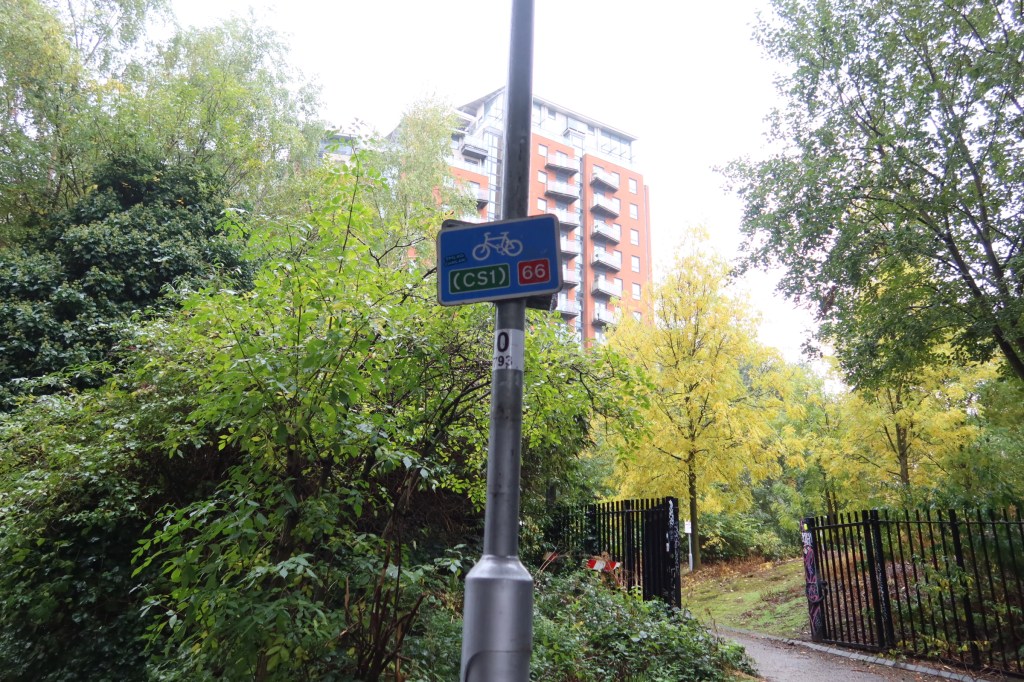
Any route you make should cater for varied abilities. I like to split my route into ‘key decision points’ where I know that if things are going wrong, there’s an injury, or I’m simply tired, I can call it a day safely. For my first Leeds route, one of my ‘escape’ routes was the A65, which turned out to be a pleasant stroll past loads of useful facilities, bathrooms, fast food outlets and bus stops. All very handy. The second was the train station at Headingley which is very close to Leeds, and finally Otley Road. I had forgotten about the ‘Otley Run’, a famous party route that local students do when they start at University, and I think I must have picked the key date in their social calendar yesterday as I battled through hundreds of merry students in fancy dress packing out all the local pubs. Carnage. Now there’s a hazard you don’t get taught how to manage on your Mountain Leader training week!
So I walked each escape option in full, and even caught the train from Leeds back to Headingley station just so I could be totally prepared for a future group if I ever lead there. This takes extra time but it is part of how you scope out an area. There’s nothing worse than assuming you have everything covered and then realising what you thought was a good route turns into a pathless nightmare next to a road with a 50mph speed limit or something.

Let’s assume that everyone in your group is fit and healthy so they want to keep going. They might think that the circuit you have planned, around 4 hours, is too short. Therefore you can increase the difficulty of it by adding in some knowledge challenges. This is another form of mixed ability – the skill of knowing your environment. I split this knowledge into three categories – geology, ecology, archaeology. Again, do your homework. I bought and borrowed a number of textbooks to help me familiarise myself with these subjects for this specific area (see picture below).
If you take time to break the route into logical sections, you can keep an eye on your group’s fitness, hydration, energy levels, and explain to them what lies ahead and about the availability of ‘escape’ options. This will also reduce stress levels for those who really have no idea where they are or what to expect next. It is your job to communicate that to them honestly. This is especially true in terms of ‘how far is it until the end?’ kind of questions. This is another way of someone saying they have had enough. Ultimately, groups of varying abilities will be influenced by group psychology too. Don’t expect to fully complete your well-planned route with everyone, though you should try to encourage people and prepare them appropriately so they have every fair chance of doing so.
For those of you wanting to know how my day out was a Quality Lowland Day, here are the specifics measured against the criteria set out by Mountain Training:
- ”The individual takes part in the planning and leadership” – I planned the entire route although I did look at the starting circular walk in Mary Welsh’s book.
- ”An unfamiliar locality is explored” – The Meanwood Ridgeway trail was new to me though the canal was not.
- ”Navigation skills are required” – I used an A-Z map for Leeds City Centre at 1:11520 scale to help me relocate between bridges and locks on the canal, and a 1:25k scale OS map to navigate through the woodland.
- ”Knowledge is increased and relevant skills practised” – I gained knowledge of the geology, ecology and archaeology of the route and practiced plant identification skills against the noticeboards in the woods.
- ”Judgement and decision making is required” – asking the question, at each key decision point, if I wanted to continue or not. Also, relocating and redirecting myself in the woods when the path was blocked for maintenance reasons.
- ”Four hours or more journey time” – The walk lasted 7 hours including walking the escape options. The circular route is about 4 hours on its own.
Here are the books I used to prepare the route before starting out:

I’ll be back (not in a Schwarzenegger kind of way) next week with an update of how things are coming together with my first month theme of Careers Advice in Action for Mountain Training Candidates, with a look at how you can help train mixed ability groups for the Yorkshire Three Peaks challenge while also being creative with route choice!
See you on the trail 🙂

 leadforaliving.co.uk
Leave a comment