
So here’s a new challenge, one that I have thought about doing for a long time but always hesitated to start. Until now.
What would happen if I took some of the general careers advice I usually give to students and applied it to my development as a Mountain Training candidate? What sort of things would I end up doing? Does the advice actually work in reality? What would happen if I documented it for a whole year? Would it help people in similar situations or would it prove to be disastrous as a project? There is only one way to find out, and that is by doing it.
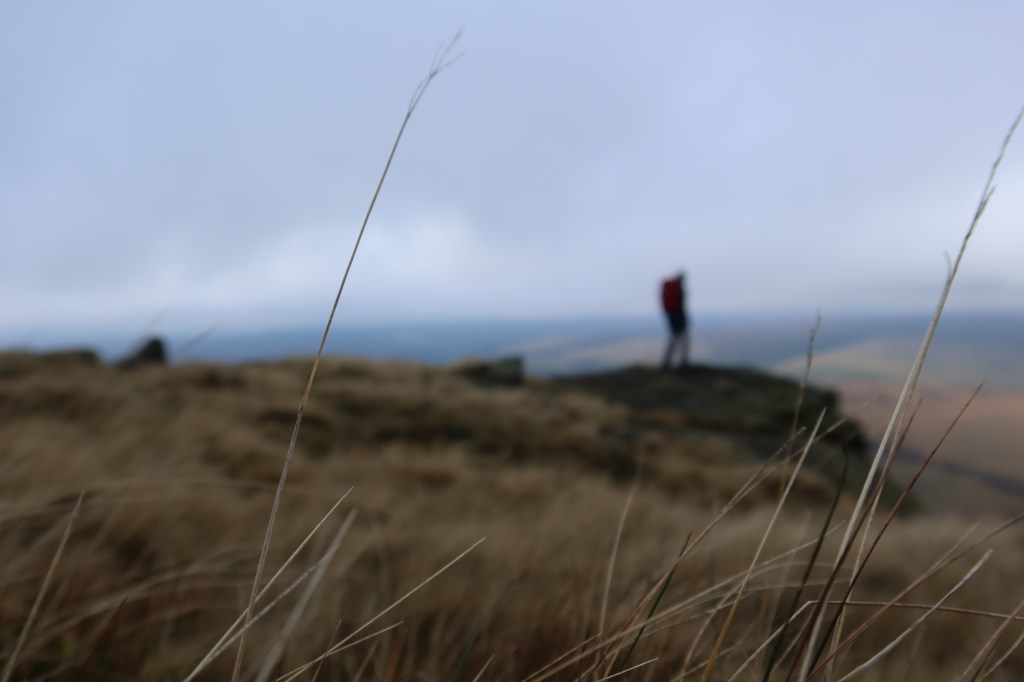
The above picture kind of sums up the way I feel about it. Like someone trying to work out what the blurred object in the distance looks like, what they have done to get there, what they know that I don’t. What does the journey look like?
I currently work 5 days per week as a careers adviser. I have a mountain leader qualification that I am gradually developing. But I figured it might be useful to do this as a blog series showing how I am conducting my own career development. It could potentially help others out with their outdoor careers too.
Here are my rules and aims. It will be a structured year, with six themes, and a detailed blog post once per month. One month will be introducing the theme and my thoughts on it, then the second will be putting what I have learned into practice for my aims. I have focused the themes on questions I have been asked regularly by students and other Mountain Leaders.
I have two overall aims which I am working towards. One is to complete a qualification called the Lowland Leader Award, and the other is to hike all parts of the ‘Derwent Watershed’ long distance trail in the Peak District. I will be showing you how I try to answer some fundamental careers questions, which you can transfer across to other industries and sectors as well. Some of these questions are:
What does a day in the life of a Lowland Leader look like?
Where do they work and who do they work with?
How can the award be used professionally?
And so on.
It might be puzzling, from a careers perspective, for me to mention the Derwent Watershed walk. After all, it’s just a long distance walk, so why include it? Well, one of the activities that professional outdoor walkers get involved in is making guidebooks that they then market as their area of expertise in leading groups. This would make a great combination of my skill sets, interests and qualifications. The six themes will help with this as well.
The six themes are:
What is ‘career research’ and what does good research look like?
How can YouTube actually help with career development?
How do you make connections and how do you maintain them?
What do I do if I decide I don’t like this career?
What sort of skills are useful for this career?
What is the difference between free and paid-for CPD courses?
Hope it helps you!

 leadforaliving.co.uk
Leave a comment