
We’ve all been there.
You’ve worked hard to get the time off work, driven for hours, carefully prepared and packed all of your kit and are mega psyched to summit the Big One in the Lakes – Helvellyn.
Except, the weather forecast isn’t great, it’s blowing a gale, feeling pretty grim. Should you just battle on anyway? You can see others on the ridgeline above. It must be OK if they are there, right?
Well, not quite. This is where good route planning and decision-making can either make, or break, your day in the mountains. So how does it work? (scroll down, or read on, for the video)
Firstly, way before you pack your bag, make sure you plan your back-up route as carefully as your main aim. This is best done with a weather forecast handy. For the most part, strong winds are the deal-breaker in the UK for hiking. The higher you go, the worse the wind gets. Winter conditions are a different game all together and this blog does not factor those in.
So two good things are required from you. The first is something called a KDP, or ‘Key Decision-Point’. A KDP works best when you have options to choose from (a path junction for example) or a section which could be committing in bad weather (river crossing etc). It is a point at which you assess conditions and either fully commit to Plan A, or fully commit to Plan B. Fully committing to Plan A means you are comfortably confident you can handle the conditions to keep yourself safe until you reach your next KDP or your final goal. This, in turn, means staying warm, dry, well-fed, hydrated and able to use navigation tools when required. If you’re going to struggle with any of those then don’t keep on. If you feel you want to challenge yourself, then maybe create a short distance goal of 1/200 meters and see how it all feels. In other words, keep making good decisions and stay in control. The worst is where you begin walking on auto pilot thinking it will all magically get better. That can only really end badly.
The second is some awareness of the conditions. If you are struggling to stand up in the wind at 600 meters (as in the video), then you’ll really struggle on higher ground. High winds easily lead to falling over, twisting an ankle, loss of equipment and general badness. Just think of the poor Mountain Rescue team that might have to come and get you off the hillside if you make the ‘hero’ judgement to press on.
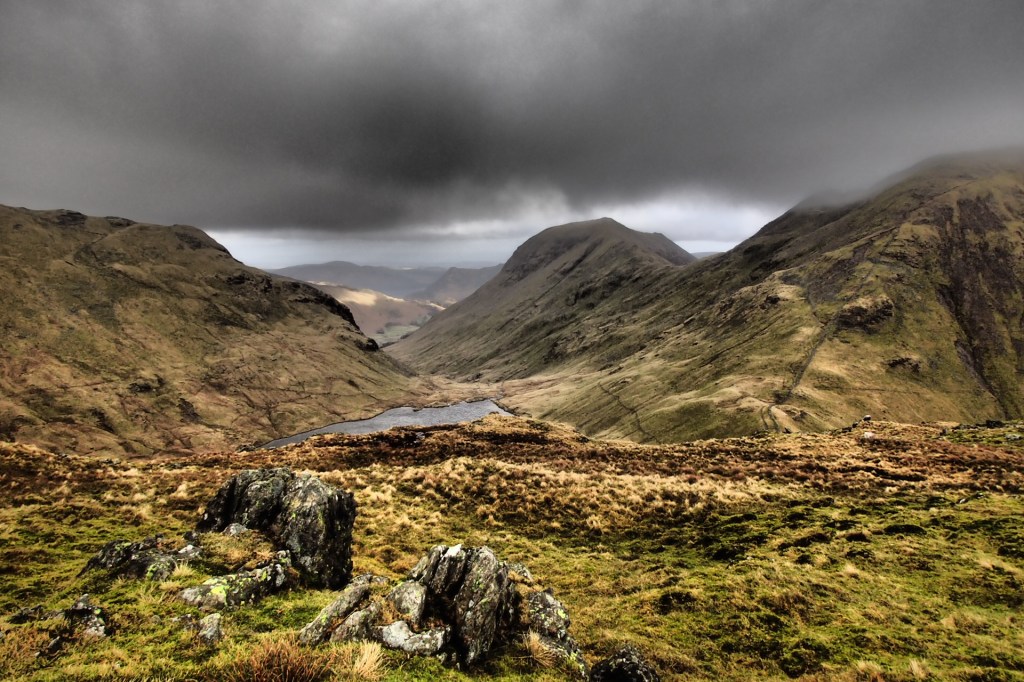
In the video, you can see ‘white caps’ on the small waves on Grisedale Tarn. This means it is very windy. My suggestion is, if you are new to hiking or can’t remember a time you were out in those kind of winds, it is safer to find an alternative adventure for the day. This can be either sheltered, or lower down. Helvellyn is one of the most popular hikes in the UK but that does not mean that everybody there has made sound judgements according to conditions, and you should never hike a path because others are there. They might be in difficulty, and you could be too.
It always feels a bit disappointing to turn back on a mountain, particularly if the walk in was fine and you are feeling good. This was the case for me in the video, but I knew that to push on was silly. I would have pushed on if it was a Quality Mountain Day I was doing for my professional logbook – but if you are out for a leisurely hike to enjoy the mountains then the best thing there is to turn around and do something else. I saw quite a few other groups making decisions like this as well, with mixed outcomes. If in doubt, err on the side of caution.
My Plan B was to head up Seat Sandal, as it has a sheltered approach from the wind, is only 736m high and was a peak I had never done before. It made for an incredible mini adventure, even with some snow on the top.
The mountains will always be there next time – just keep your fingers crossed for some gentle breezes and a bright blue sky!
 leadforaliving.co.uk
Leave a comment