
In this article, I want to highlight the different kinds of prep you can do for your winter mountain leader days at home for use on the hill later. I also want to list specific ‘hill skills’ that you can consider practicing in winter conditions. I learned recently, described in another post, that the emphasis is more about the journey in winter conditions than the skill practiced.
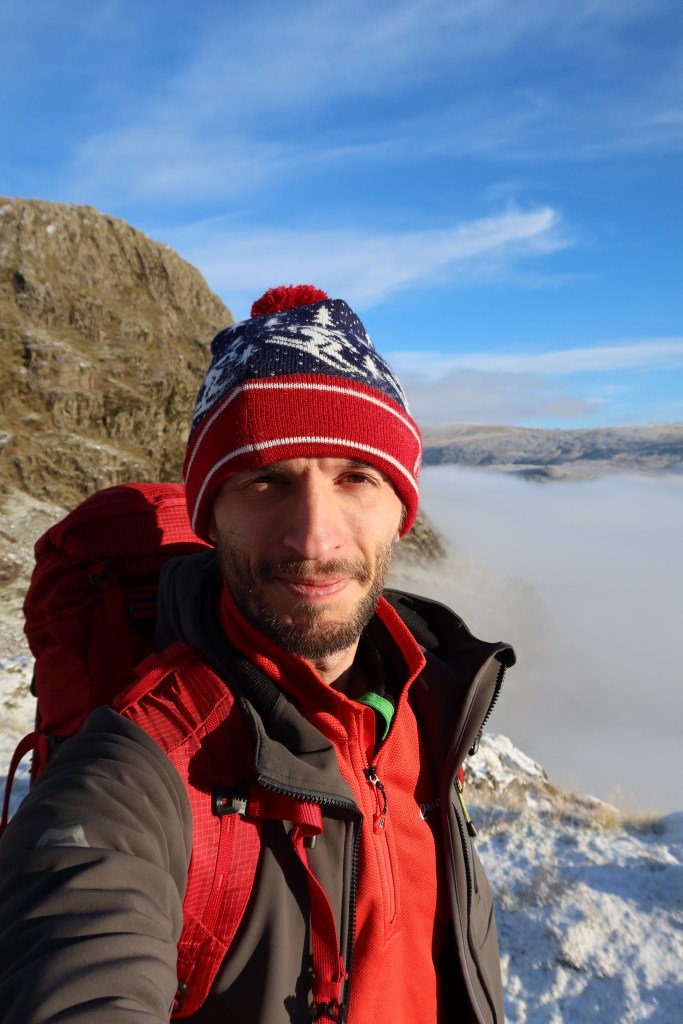
So how to best incorporate skill sessions into your Quality Days? I have decided to focus on one skill with each day and build up slowly. For example, my most recent winter day was on Fairfield in the Lake District. I concentrated mostly on the journey but also on timing my navigation legs in some very windy and wintry conditions. I discovered my pace to be just below 2km per hour which is a good rule of thumb to remember. That was slower than I anticipated so good learning for me. This is what it is all about – the more accurate you can be with your focus for the day the more you will get out of your time in the mountains. And let’s face it, unless we’re lucky enough to live in a mountain environment, those moments will initially be fleeting until we build up the experience to slowly transition into sustainable mountain careers. If you have 8 hours in great conditions, then make every single second count and enjoy it as much as you can.
Taken from the Candidate Handbook for the Winter ML scheme on the MT website, below is a list of skills and knowledge that can be built up over time either at home, or on the hill:
At Home:
E Learning modules on mountain weather and geology – Winter Mountain Leader page on the MT website
Be Avalanche Aware online course
Read all of the Winter Skills Handbook
Familiarity with legislation around Duty of Care and also the Adventurous Activities Licensing Authority (AALA)
Plan a winter journey – add in ‘escape’ routes and KDP’s (Key Decision Points) on to your map so it is easier to see. Consider adding in compass bearings for critical sections if appropriate
Read a variety of forecasts for a particular day for different areas over a period of time – what are the differences and similarities?
Become familiar with the SAIS (avalanche information service) and how it is put together
Research ‘decision making’ and the factors that contribute to successful and unsuccessful decisions made on mountain expeditions
Learn how equipment is made and why different fabrics are used etc
Which kit is specifically for winter environments and why is it used?
Reflect at home after each journey – what worked well and what didn’t? Was your equipment up to standard or were you too cold, wet, boots not fitting properly, crampon straps not working etc
Try to evaluate effectiveness of budget priced kit for the worst conditions – what do you think will work and what will? Use some ‘crap kit’ in foul weather and check how good you think it is
Plan journeys on mixed terrain and different angles of mountain side, well away from footpaths and well-trodden routes.
Convert your journey into a ‘fly though’ on OS maps online to build up an accurate idea of the terrain prior to departure
commit EDICTS and IDEAS strategies to memory for group teaching purposes
Watch my YouTube content on ‘How To’ at a basic level to inspire your students. There are many more to come with one uploaded every two weeks so watch this space!
Make some learning cards for use on the hill (laminated) so that clients can, if they wish, self select key skills to learn. Apply the edict or ideas model to their choice
research environmental legislation such as CRoW Act etc
Develop relevant personal knowledge about flora, fauna, geology, landform processes (geomorphology), local history, heritage and language, place names, folklore, future challenges and current issues in sustainable mountain development
On The Hill
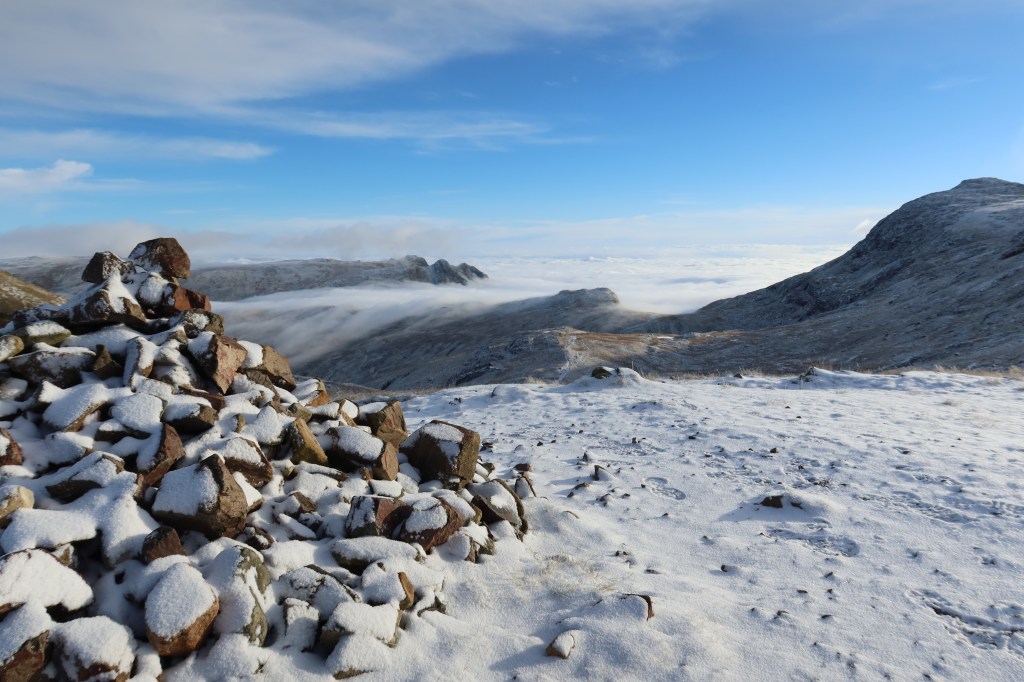
After your first winter journey, consider if everything went to plan or not – reflect on the mountain what is working and what is not and try to find out why
Developing mental resilience – create an aim in foul conditions and stick to it
Gain experience leading others, even before the training course. This will help become familiar with leading parties in winter conditions
Practice the Vision, Support, Challenge model of leadership with a group
Gain lots of personal days specifically in the Scottish Highlands to build up resilience
Practice constructing snow shelters using an ice axe alone
Practice crampon and axe techniques on mixed terrain and consider the key principles of how you might teach someone else how to do the same
Develop dead reckoning and distance estimation skills in foul weather
navigate each journey on a mix of maps (three different scales – 1:25k, 1:40k and 1:50k)
with a group, carry spare clothing, spare food, a shovel, group shelter, blizzard survival bag, long sling, karabiner, emergency rope and walking poles
Practice cutting bucket steps and kicking steps for a group to use
In the steep ground section of your journey, imagine you had a group – which techniques would you use to reduce risk in the event of a trip or fall?
And that’s it! Good luck and enjoy your QMD’s 🙂
 leadforaliving.co.uk
Leave a comment