
- What makes a Quality Winter Mountain Day?
- What does your logbook need to include?
- Finally, what are the instructors looking for on the training course?
To help answer these questions, I recently spotted an advert for an evening webinar delivered by Scotch on the Rocks Guiding. The focus of the session was in preparing for ML Winter training which is great for me as it is exactly what I’m currently aiming for. In addition it’s also useful as my DLOG for winter days is a bit patchy – some of the days are semi remembered, others were failures including emergency bivis so not really that great to show how prepared I am. In other words, I can start from scratch and cover the process on here in ‘real time’ which will be useful for us all.
Sandy Paterson from SOTR went through loads of details and I think everybody learned a lot. The main take home points for me included the following:
Snowholing is incredibly risky and should not be done more than needed (in other words, no need to do it until being shown safe methods on the training course)
Navigation, mountain fitness, leadership and the ability to apply Be Avalanche Aware knowledge to a winter journey are critical to success
The emphasis is on the journey for each day on the hill, not on skill practice or Grade 1 climbing etc. These things should be developed but should not be the sole purpose for heading out.
This was a bit of a game changer for me, as I had previously looked at the mammoth amount of new skills to learn and decided that each day should be packed full of skill practice. My first vlog on this, attached to my next blog post, is partly journey and partly skill oriented. So already I’m tweaking my approach because of learning which is perfect – it shows I’m making some kind of progress.
Sandy was clear when I asked him that ‘naturally skills will be practiced on the journey, and this is fine, but don’t head up to Coire an Sneachda just to build rope anchors and then head home for example. That is not a WQMD’. So that’s clear to me now which is useful, and will help me plan proper days in the future.
So what should the logbook include?
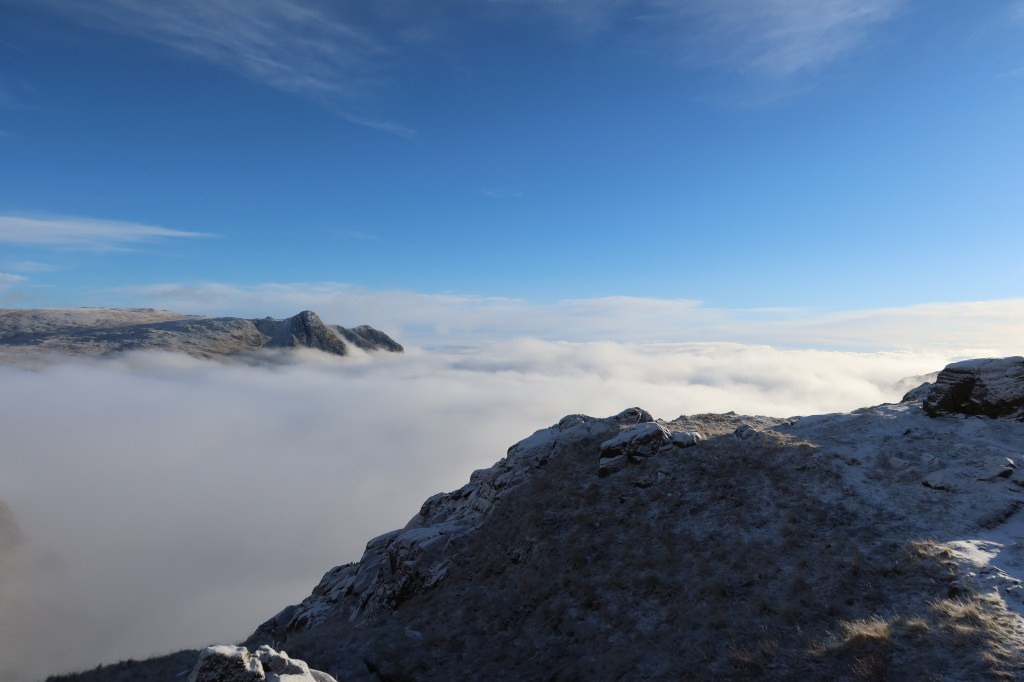
If you imagine the logbook a bit like an artists portfolio, then you get a good idea of what it should show. A clear progression in terms of style and competence, with experience gained in marginal and ”full on” conditions, in a variety of places throughout the UK. For the training, the Lakes and Snowdonia are great, plus some experience in Scotland. For the assessment, much more emphasis is placed, rightly so, on Scottish days.
In terms of content and how this is shown, make it easy for the assessor to get a good look at what you’ve done without adding masses of pointless detail. So a clear description of your route, and a brief explanation of how the journey meets the requirements of a Quality Mountain Day. Sounds easy in principle, but there’s a few complications which I’ll specifically address in a later post.
Lastly, the 40 days should be the ‘best ones’ – meaning you’ll have more than 40 logged in the first place. Also, if one or two that you’ve flagged as ‘wow’ are seen as a bit crap by the assessors, if you have stacks of other days in your log it’s likely they can find another couple to take the tally to 40. I tend to focus on ‘areas’ in my DLOG – so I’m searching for a winter day in each area of the lakes, each area of Snowdonia and each area of Scotland. By default this will meet the requirements for variety of location and will also mean that if I spend a weekend in these locations (which add up to close to 20) I can probably get at least 30 decent days, ideal to present for training, before focusing almost solely on Scotland and getting a logbook with around 100 days or so. This is my goal.
What are instructors looking for on the training course?
According to Sandy at SOTR, candidates need to be prepared for some serious and strenuous days out on the hill. Think 6 big mountain days with 8 – 10 hours each day spent either walking or learning outdoors. We’re not talking tea, coffee and shortbread while watching a powerpoint here. This is the real deal. So getting fit enough is key.
Secondly, being at current ML Summer standard was emphasised – be slick at everything a Summer ML would be expected to do (think basic rope work, navigation, etc) and that’s the foundation level for ML Winter training. Naturally, this means getting out regularly throughout the year in the mountains even if conditions are not ‘winter’, to keep the skill level sharp.
Lastly, familiarity with Be Avalanche Aware would be useful as it will be discussed a lot over the 6 day course and can easily be accessed for free online prior to registration for training. On that note, all logbooks are scrutinised by Mountain Training Scotland before being accepted for training courses. This raises the level of seriousness and commitment/professionalism far beyond that of Summer ML.
 leadforaliving.co.uk
Leave a comment